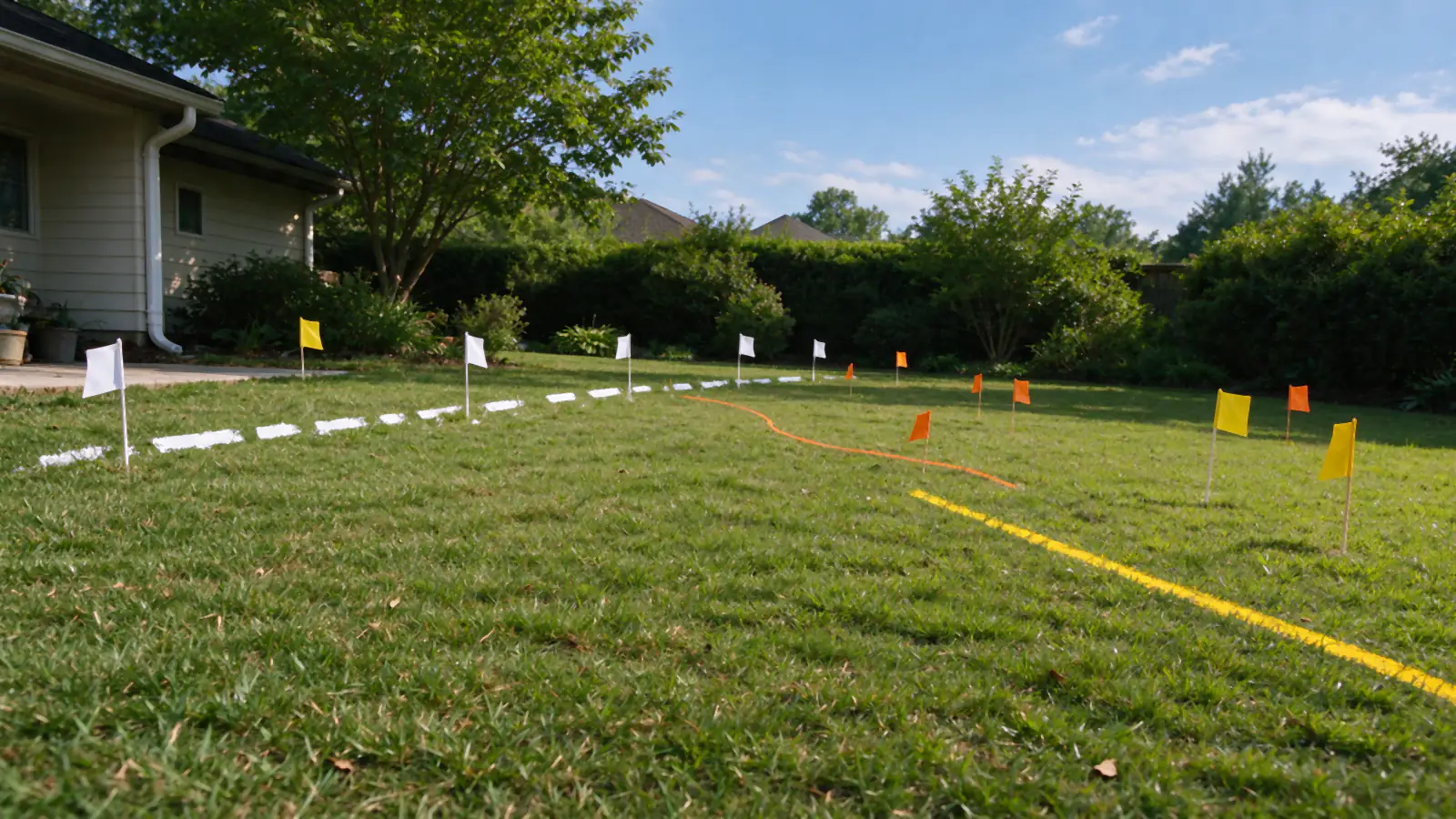
Yes, if the holes will be dug with mechanized equipment, which includes a powered post-hole auger. Georgia law requires a locate request through Georgia 811 before mechanized excavation, then a wait of at least 3 business days for utilities to mark their lines. Hand digging is not covered by the requirement, but Georgia 811 still says contacting them first is the safest course.
Upright Johns Creek Fencing requests the 811 locate as part of every installation that uses powered equipment, at least 3 business days ahead. This guide explains what the request covers and what it does not.
What Georgia law requires
Georgia’s Underground Facility Protection Act requires a call to Georgia 811 before excavating with mechanized equipment, before demolition, and when work will bring people or equipment within 10 feet of overhead power lines, even on private property. The Georgia 811 excavator manual defines mechanized equipment broadly, as equipment powered by a motor, engine, or hydraulic or pneumatic device used for excavating. A gas or hydraulic auger qualifies.
Manual digging with a post-hole digger or shovel is not required to be called in. Georgia 811 still recommends it, because any damage to a line can be the digger’s responsibility to repair, and a cut gas or power line is dangerous. Suwanee’s planning guidance makes the same point to homeowners: the law covers mechanized digging, and the city encourages a call for a fence anyway.
The waiting period and the 30-day life
After a request, the excavator waits at least 3 business days before digging. Georgia 811 counts business days as Monday through Friday, 7:00 a.m. to 4:30 p.m., excluding major holidays; a request entered after 4:30 p.m. counts as entered the next business day. The effective date is printed on the request.
A normal locate request lasts 30 calendar days after its effective date. If installation slips past that, because of rain, a permit delay or an HOA review, a new request is needed. That is one reason the locate is usually requested close to the installation date, after approvals are in hand.
What gets marked
Georgia 811 notifies its member utilities, which send locators to mark their lines with paint and flags. The standard colors are red for electric power, yellow for gas and oil, orange for communications, blue for potable water and green for sewer. White paint or flags mark the area where digging is planned, which helps locators focus on the fence line.
Utilities report their status through Georgia 811’s positive response system, so the excavator can check that every utility has responded before digging.
What does not get marked
Utilities mark their own lines, usually up to the meter. Anything past the meter that you or a previous owner installed is private and is not marked. In Johns Creek backyards, that commonly includes:
- Irrigation lines and sprinkler heads.
- Landscape and pool lighting.
- Invisible dog fence wire.
- Power, gas or water lines to a shed, workshop, pool or outdoor kitchen.
- Septic lines on lots that have them.
Point these out at the first visit. A private locating service can mark them if their routes are unknown. Posts are then placed around them.
Digging near marked lines
Georgia’s law sets a tolerance zone of 18 inches on either side of the outer edge of a marked line, where only careful methods are allowed: hand digging, potholing, soft digging, vacuum excavation or pneumatic hand tools. For a fence, posts are usually shifted along the line to stay outside the zone, and any hole near a mark is dug by hand. In utility easements, where several lines often run together, gates are sometimes placed so utility crews can reach boxes and pedestals.
How the locate fits the schedule
On a typical Johns Creek job, the order is: plat and site plan, HOA approval, the city permit, then the 811 request at least 3 business days before installation. Marks fade and flags get mowed over, so they are kept visible until posts are set. The installation timeline guide shows how the steps fit together.
Post depth and what lies below
Fence post holes in north Fulton clay are usually deeper than people expect, which is part of why the locate matters. The post depth guide explains how depth is chosen for height, gates and soil. Questions about a specific yard can go to the number at the top of the page or the form below.
If a line is hit
If digging damages a line, work stops at once, and Georgia 811 and the affected utility are contacted. Gas leaks call for leaving the area and calling 911 from a safe distance. Even a scrape or dent in a pipe or cable’s coating is reported, because it can fail later. That is the reason careful methods are used inside the tolerance zone and posts are moved rather than forced near a mark.
Homeowners digging their own posts
Homeowners building their own fence, rather than hiring fence installation, follow the same law when they rent a powered auger: the request goes in, the wait applies, and the marks are respected. With a manual post-hole digger, the call is not legally required but is still the safer choice. The request is free to make through Georgia 811’s website or by dialing 811.