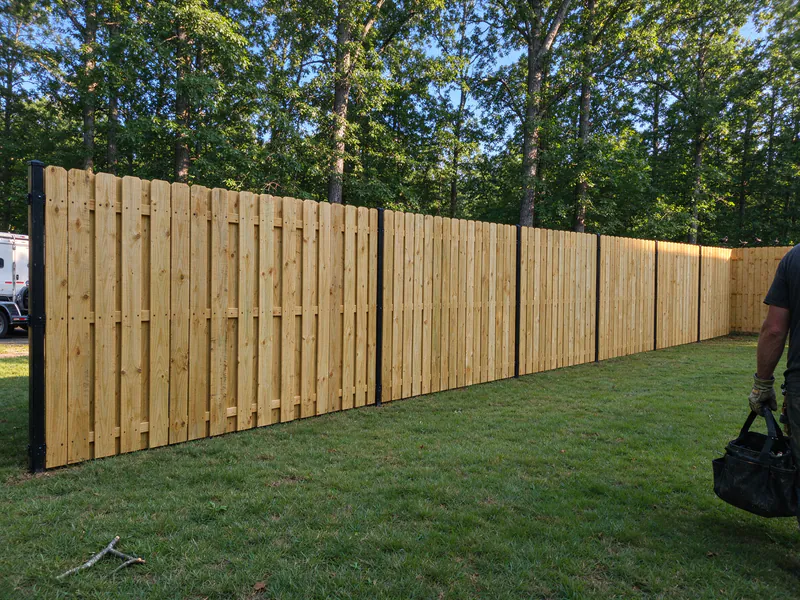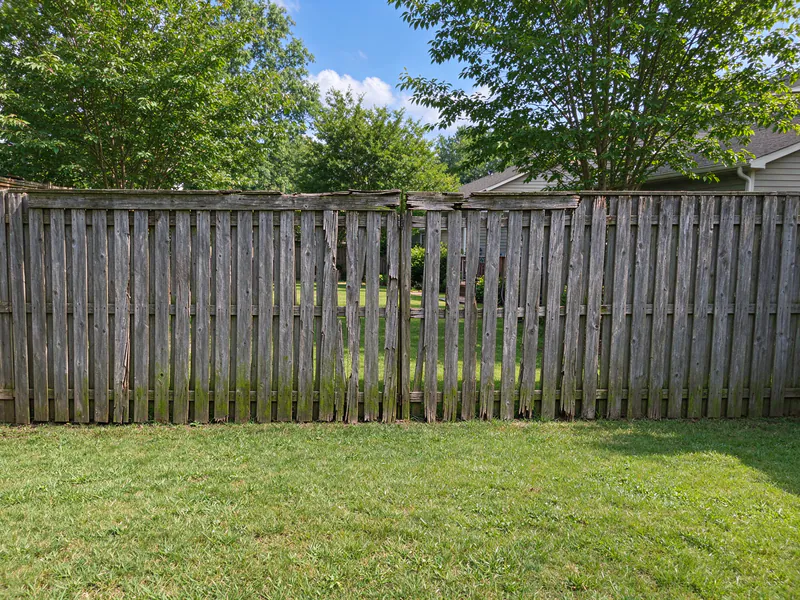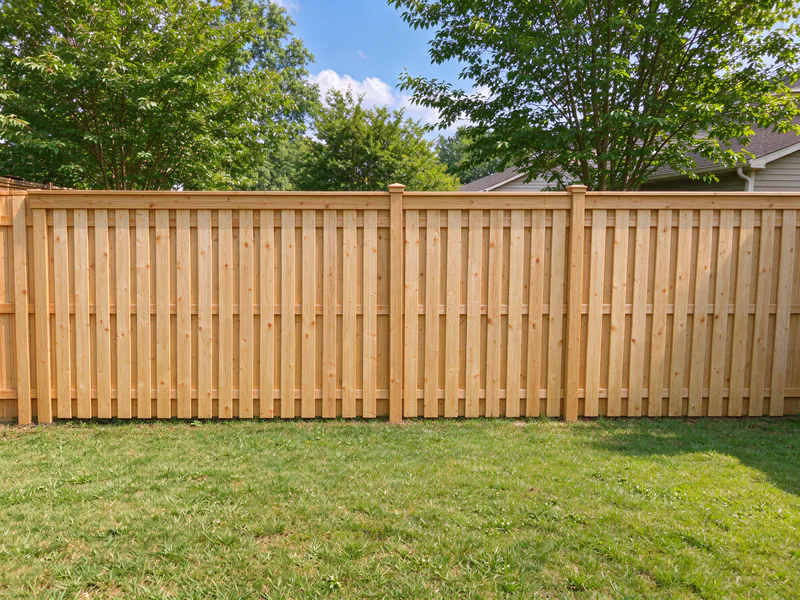
Upright Johns Creek Fencing replaces worn-out and damaged fences across Johns Creek and north Fulton, with the work done by licensed and insured fencing contractors. A replacement looks like the simpler job, since the fence is already there, but it carries two things a new fence does not: an old fence to remove, and an old line that may or may not be in the right place. In Johns Creek it also needs a permit; the city requires one to replace an existing fence just as it does for a new one.
Most replacements here start with wood. Pressure-treated pine privacy fences fail at the base of the posts first, where wet clay, mulch and termites meet the wood, so a fence can look fine from the patio while the posts are soft at ground level. When that is happening along most of the line, repairing post by post keeps chasing the next failure.
What happens on the first visit
The first visit answers whether this really is a replacement. Each post is pushed and probed at grade, rails are checked where they meet the posts, and gates are checked on their hinge posts. If the failures are local, a repair is the better plan, and that is what the visit recommends.
If replacement is the answer, the old line is compared with the plat and the visible pins. The material, height and style of the new fence are discussed against your HOA’s rules and the Johns Creek permit requirements. The estimate then lists the tear-out, haul-away, the new fence, gates and the permit as separate lines.
Checking the old line before reusing it
An old fence is not proof of where the property line is. Fences were sometimes built inches or feet off the line, around trees that are now gone, or to an owner’s best guess. Replacing a fence in the same holes repeats whatever was wrong. The recorded plat, available from the Johns Creek City Clerk through a public records request, shows the lot’s dimensions and easements. When the new fence will sit close to the line, a licensed surveyor locates the corner pins first. The survey guide explains when that is worth doing.
The check also covers rules that may have changed since the old fence went up. The Johns Creek zoning code keeps fences 3 feet off a public right-of-way and does not allow wire or plastic fencing, including chain link with slats, along a street in single-family subdivisions (confirm with the city). A street-side run of old chain link may need a different material when it is replaced.
Tear-out done properly
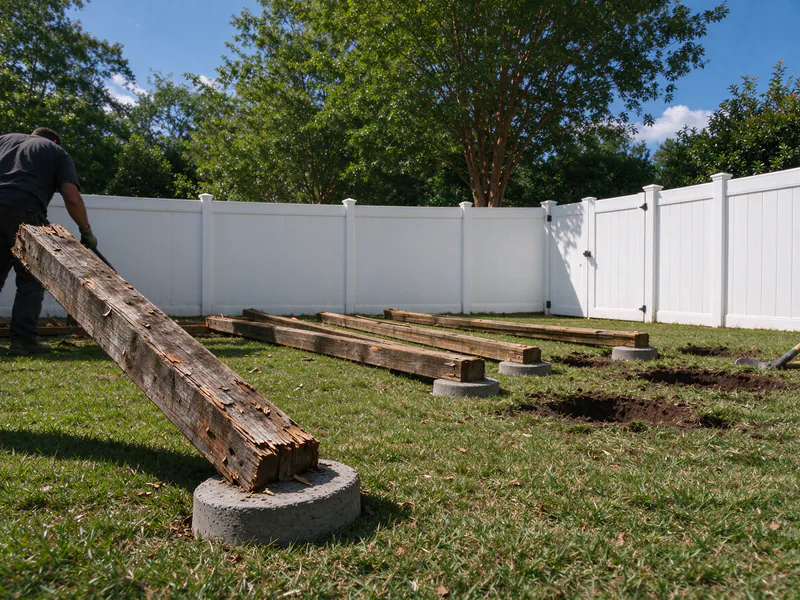
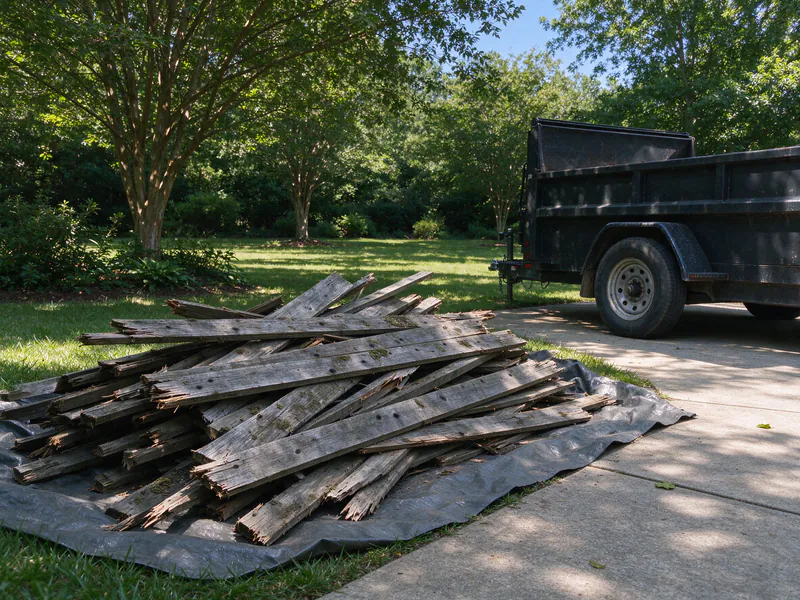
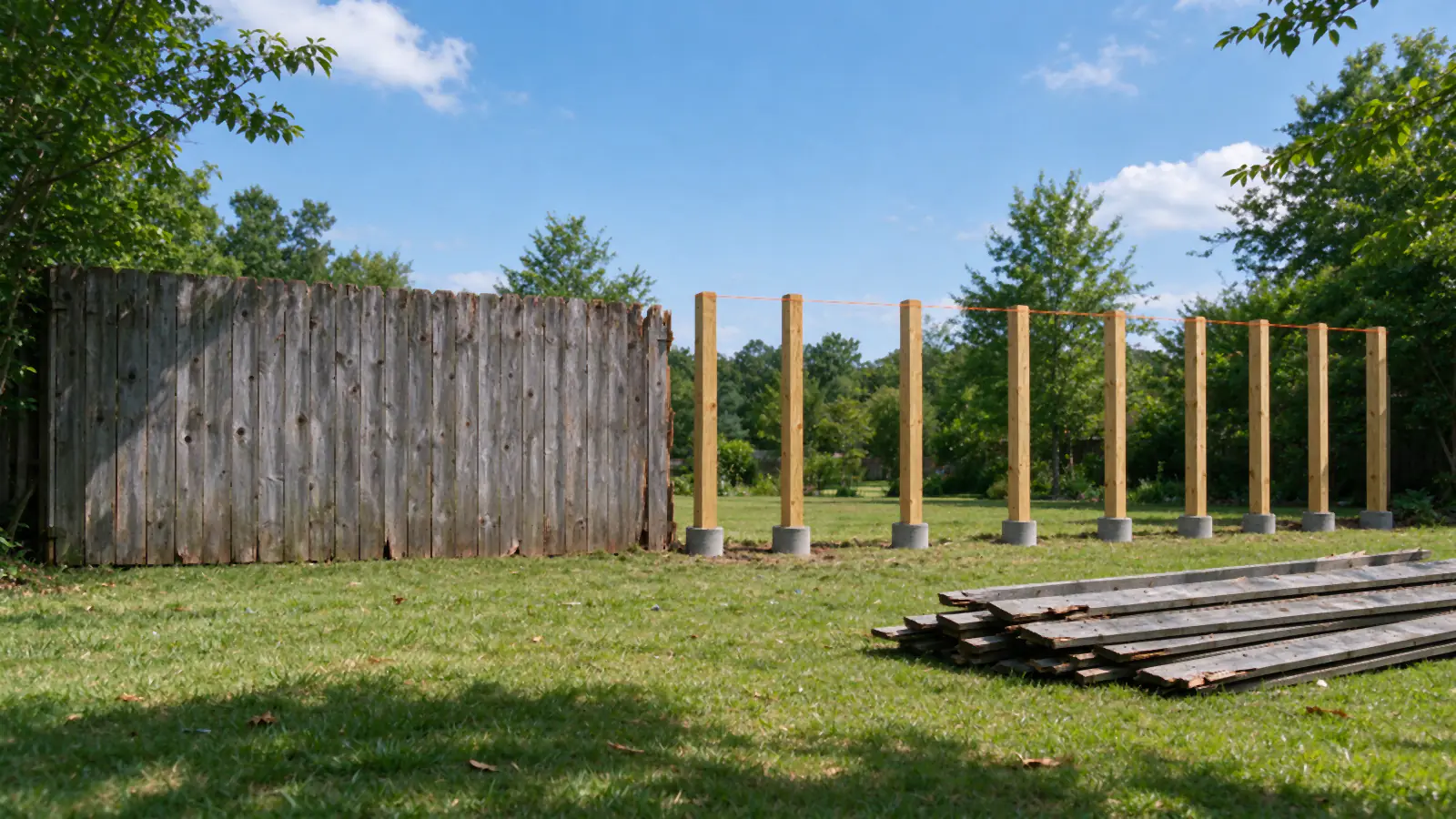
Removing a fence is more than pulling boards. Posts set in concrete come out with their footings, which takes real force and sometimes a machine in tight clay. The holes are backfilled and tamped so they do not settle into soft spots in the lawn. Nails, screws and broken panels are collected, and the debris is hauled away rather than left at the curb.
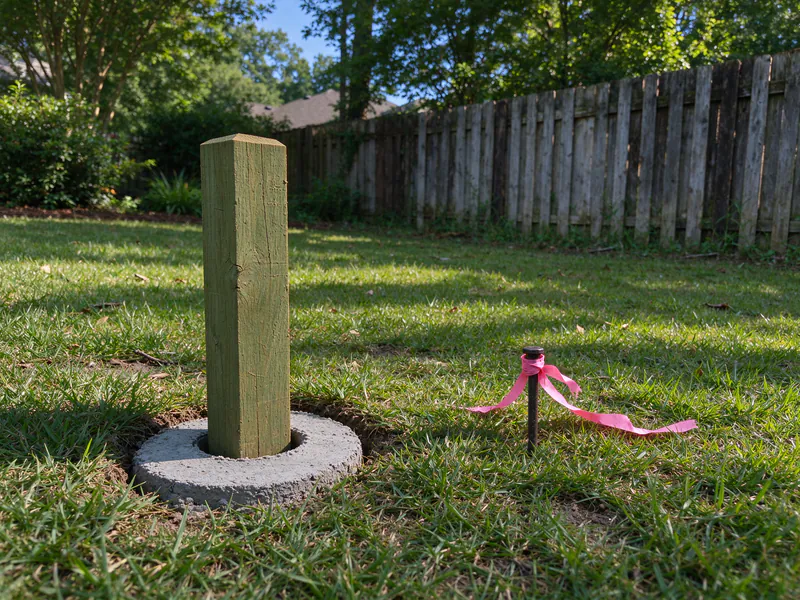
New posts are rarely set in the old holes. The old holes are full of concrete fragments and disturbed soil, so new posts go a short distance along the line in undisturbed ground, where each one can get a gravel drainage base and fresh concrete crowned to shed water. On stony ground, an old hole that already broke through rock can sometimes be reused, which is decided post by post on site.
Reusing posts: when it works and when it does not
It is tempting to keep the old posts and replace only the boards. That works when the posts are sound at ground level, plumb, sized for the new fence and set where the line should be. It rarely works with wood posts as old as the boards around them. Posts are the part of a wood fence that fails first, and they are the hardest part to replace once new panels are attached. Metal posts from an old chain link fence are seldom the right size or spacing for a privacy fence.
Replacement is also a chance to fix what failed. If the old posts rotted at the waterline, the new ones are ground-contact rated and get drainage under the footing. If a gate sagged, its new posts are sized and set for the gate rather than for a line post. If the old fence stepped awkwardly down a slope, the new one can be racked or stepped deliberately; the slope guide covers the choice.
Replacing part of a fence
Sometimes one run fails, after a storm, a fallen tree or a car, while the rest is sound. Replacing just that run is reasonable, with two caveats. New wood next to weathered wood looks different until it ages or both are stained, and vinyl and aluminum can only be matched if the same panel and color are still made. A section replacement still counts as replacing fence for the Johns Creek permit, so plan the paperwork either way. The repair or replace guide walks through the decision.
What a replacement costs
The new fence prices like a new installation: typical Atlanta-area ranges run about $20 to $30 per foot for 6-foot wood privacy, $20 to $40 for vinyl and $25 to $50 for aluminum. Tear-out and haul-away are added and depend on how much concrete comes out and how far debris has to be carried. The fence cost guide shows how those lines add up.
Scheduling around approvals
A replacement takes the old fence down before the new one goes up, so the yard is open for a short time. When a dog or a pool depends on the fence, the work is sequenced to keep that window short: the permit and HOA approval come through first, materials are on site before tear-out starts, and posts for the new fence go in the same day the old run comes out where the ground allows. Where a pool barrier is involved, a temporary barrier holds the gap closed until the new fence and its self-closing gate are in place. The installation timeline guide covers how long each step usually takes, from the HOA packet to the final gate adjustment.