Upright Johns Creek Fencing installs wood, vinyl, aluminum and chain link fences across Johns Creek and nearby north Fulton communities, with the work done by licensed and insured fencing contractors. A new fence here starts with paperwork more often than people expect: Johns Creek requires a permit for every new fence and every replacement, most subdivisions have an HOA with its own design rules, and Georgia law requires a utility locate before a powered auger goes in the ground. Getting those right first is what keeps the fence from being moved, rebuilt or fined later.
The other half of the job is the ground. USDA soil maps put most of Johns Creek on Piedmont soils with clay subsoil, with stony areas in places and creek-bottom soils near the Chattahoochee and its tributaries. Those conditions decide how deep posts go, how the holes drain and how long the fence stays straight.
What happens on the first visit
The first visit is a measurement and a conversation, not a sales pitch. The line is walked end to end and measured, corners and gate openings are marked, and the grade is checked where the yard falls toward a creek or a swale. The plat is compared with what is on the ground, and any pins, easements, protected trees and utilities are noted. If a pool is planned or already there, the barrier requirements come into it from the start.
You leave the visit with a clear picture of three things: where the line can go, which materials and heights your HOA and the city will accept, and what the job will involve on your particular ground. The estimate follows from that, with gates, tear-out, slope and access listed separately so you can see what moves the price.
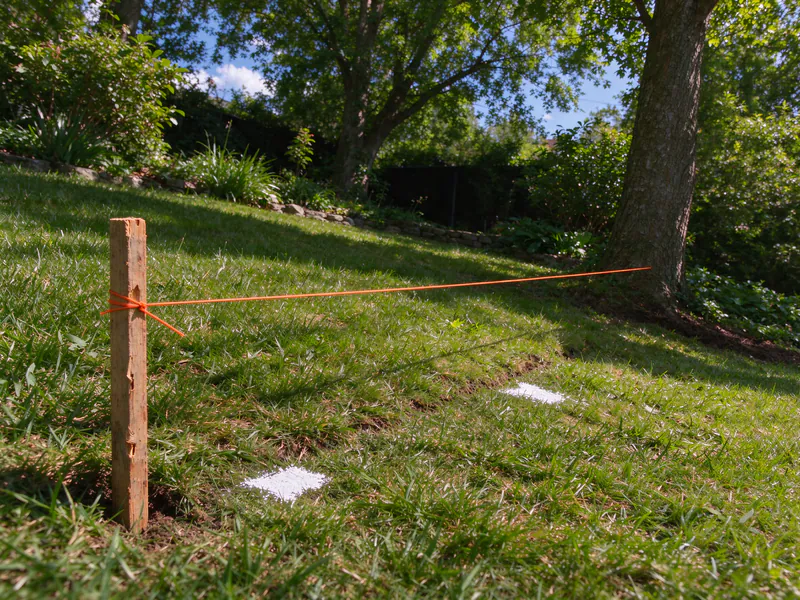
Laying out the line: plat, pins and setbacks
A fence is only as good as its line. The recorded plat shows the lot’s dimensions and easements, and copies are available from the Johns Creek City Clerk through a public records request. A plat does not put marks on the ground, and an old fence is not proof of the property line: many were built inches or feet off it. When a fence will sit close to the line, a licensed surveyor locates the corner pins, and the new line is set from them. The survey guide explains when that is worth it.
The Johns Creek zoning code also controls where a fence can sit and how tall it can be. It sets a residential limit of 8 feet from grade, keeps fences 3 feet back from a public right-of-way with a landscape strip in between, and keeps automobile gates 20 feet back from the right-of-way. Those figures come from the code as published; confirm them with the city for your lot before the layout is final. Corner lots also have a sight triangle near the intersection where fences and plantings cannot block a driver’s view.
Two more limits catch people out. Trees inside a zoning or stream buffer, inside the Chattahoochee River Corridor or classed as specimen trees need city permission to remove, so a fence line is often routed around them instead. And drainage easements, common along rear lot lines in Johns Creek subdivisions, can require a fence to come out if the easement holder needs access.
Setting posts in north Fulton clay and rock
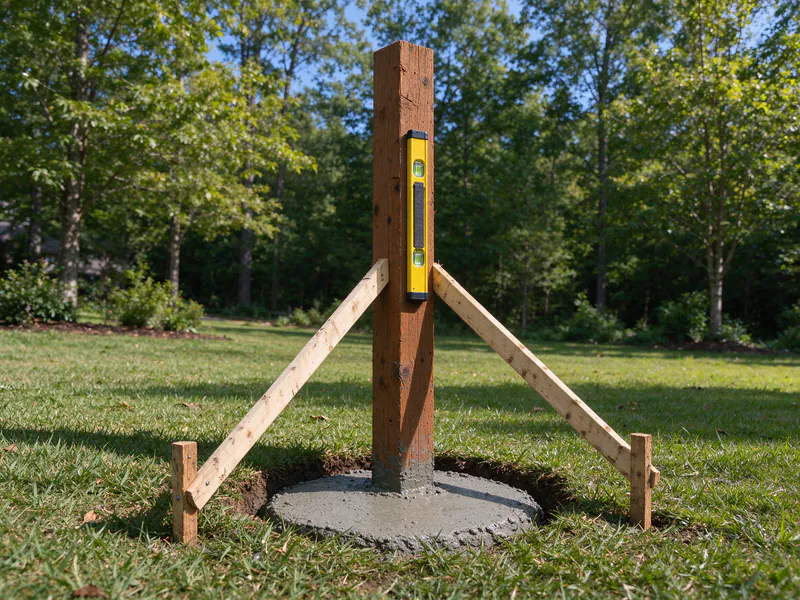
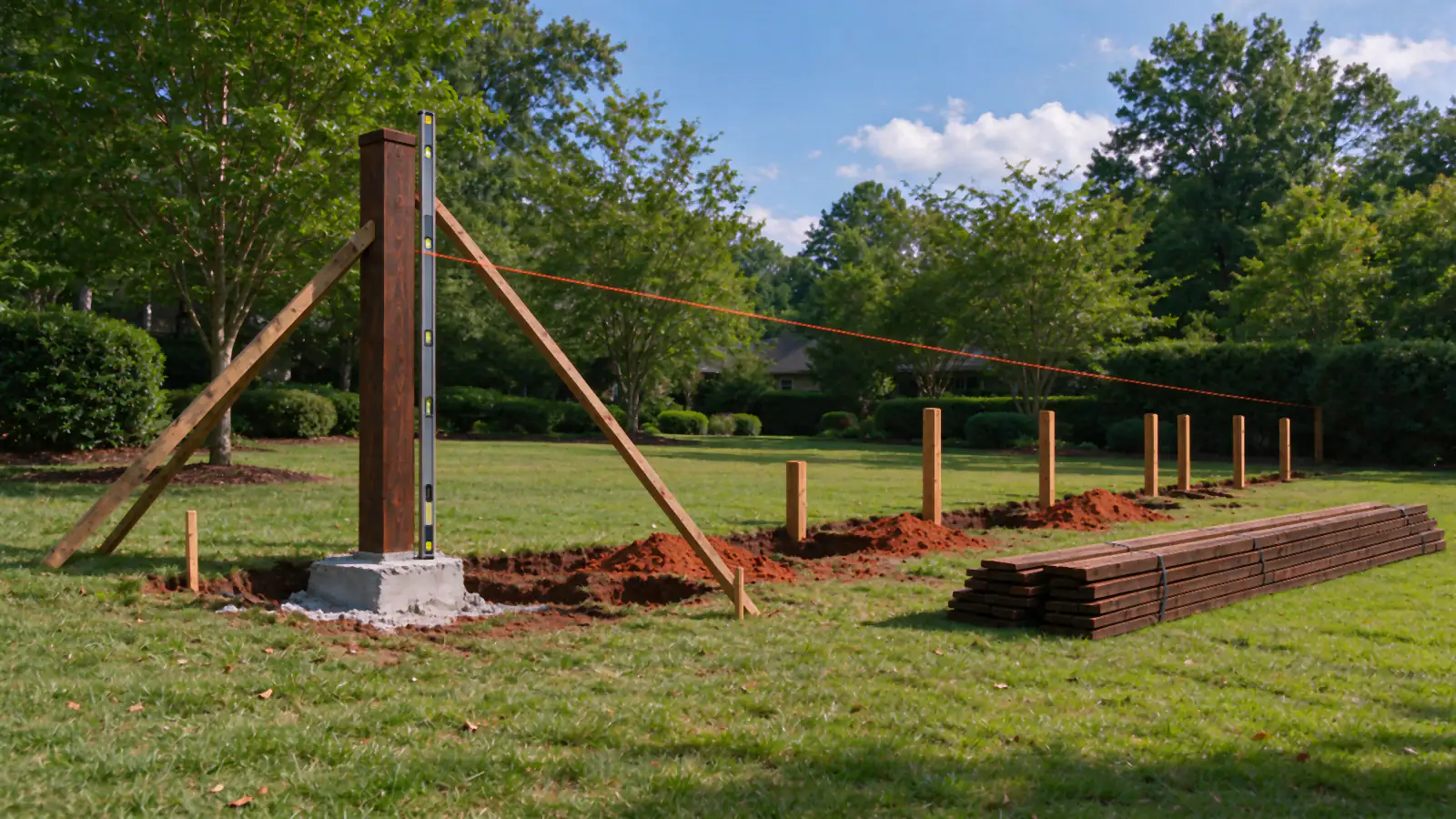
Posts are where a fence succeeds or fails. On clay subsoil, a post set in plain soil sits in a pocket that holds water after every rain; wood rots at the waterline and steel corrodes. Each hole gets a gravel base so water can drain, and the concrete is crowned at the top so water runs away from the post instead of pooling against it. For wood fences, posts rated for ground contact are used, and mulch is kept off the base.
Depth is matched to the job rather than to one number. A 6-foot solid privacy fence catches far more wind than a 4-foot picket or an open aluminum fence, so its posts go deeper and sit closer together. Corner and end posts carry the pull of the whole run and are set heavier still. Gate posts carry a moving load and get the deepest holes on the job, with larger posts or steel where a gate is wide or heavy.
Stony ground changes the method. Where an auger hits rock, the hole may be cored, hand-dug or shifted along the line, and post spacing may be adjusted so the fence still lands evenly. On creek-bottom soils, holes can fill with water while they are being dug, which slows concrete work and is one reason installation dates move after heavy rain.
Before any powered auger is used, a Georgia 811 locate request goes in. Georgia law requires it for mechanized digging, the wait is at least 3 business days, and the marks are valid for 30 calendar days. Private lines such as irrigation, landscape lighting and invisible dog fences are not marked, so point them out at the first visit.
Materials and heights that pass review
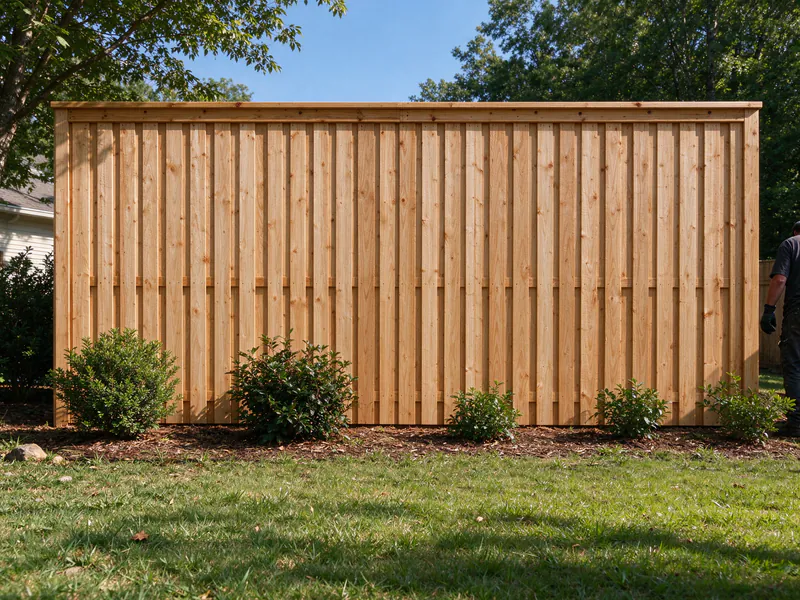
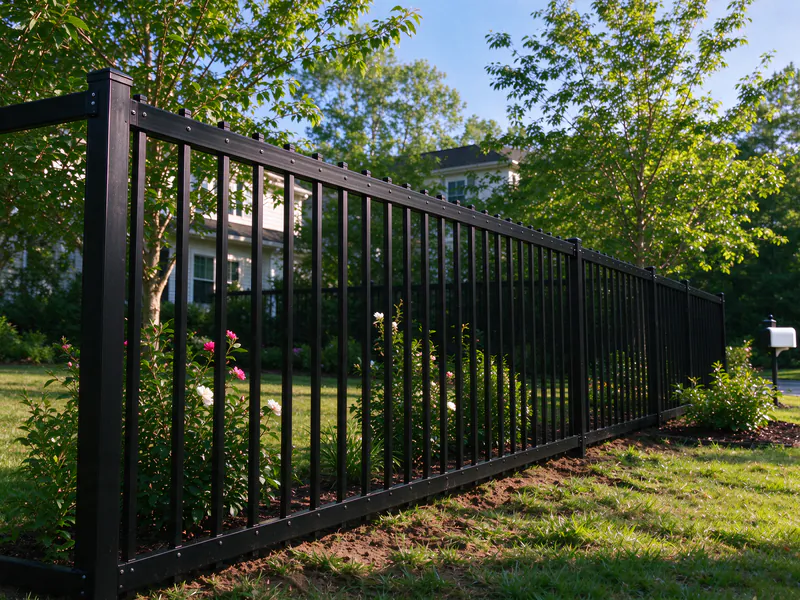
The right material depends on what the fence is for, what your HOA allows and which side of a city line you are on. Pressure-treated pine privacy fences are the most common in Johns Creek backyards, built board-on-board or shadowbox so the finished side faces the neighbor as the zoning code requires. Aluminum suits street-facing yards and pools because it keeps the view open. Vinyl gives privacy without staining but cracks on impact and usually steps rather than racks on a slope. Chain link is the lowest-cost way to contain pets, but the Johns Creek zoning code does not allow wire or plastic fencing, including chain link with slats, along a street in single-family subdivisions (confirm with the city).
Rules change across nearby city lines. Sandy Springs does not allow new vinyl fences except like-for-like replacement and requires masonry piers on street-facing runs, while Peachtree Corners does not require a fence permit unless the fence needs footers. If your address is outside Johns Creek, the plan follows that city’s rules.
Not sure which material your HOA will accept?
Send the subdivision name and a photo of the yard; the options are narrowed before the estimate.
Planning gates with the fence
Most fence problems show up first at a gate. A gate hung on a line post, or on a post set like a line post, sags within a season. Gates are planned with the layout: the clear opening is measured for what has to pass through, whether that is a mower, a trailer or a car, and the swing is checked against the slope so the gate clears the ground in its full arc. Walk gates get a diagonal brace that runs from the bottom hinge corner up to the latch side, a latch that closes without lifting, and hardware with corrosion-resistant fasteners. Double drive gates get a center drop rod and stop.
What a new fence costs
Typical Atlanta-area budgeting ranges for installed fence run about $20 to $30 per foot for a 6-foot wood privacy fence, $20 to $40 for vinyl, $25 to $50 for aluminum and $8 to $24 for chain link. A walk gate typically adds $150 to $600. These are ranges, not quotes: the length of the run, the number of corners and gates, slope, rock, access for equipment and removal of an old fence move the number. The fence cost guide breaks those factors down, and the cost estimator gives a range for your length and material without a phone call.