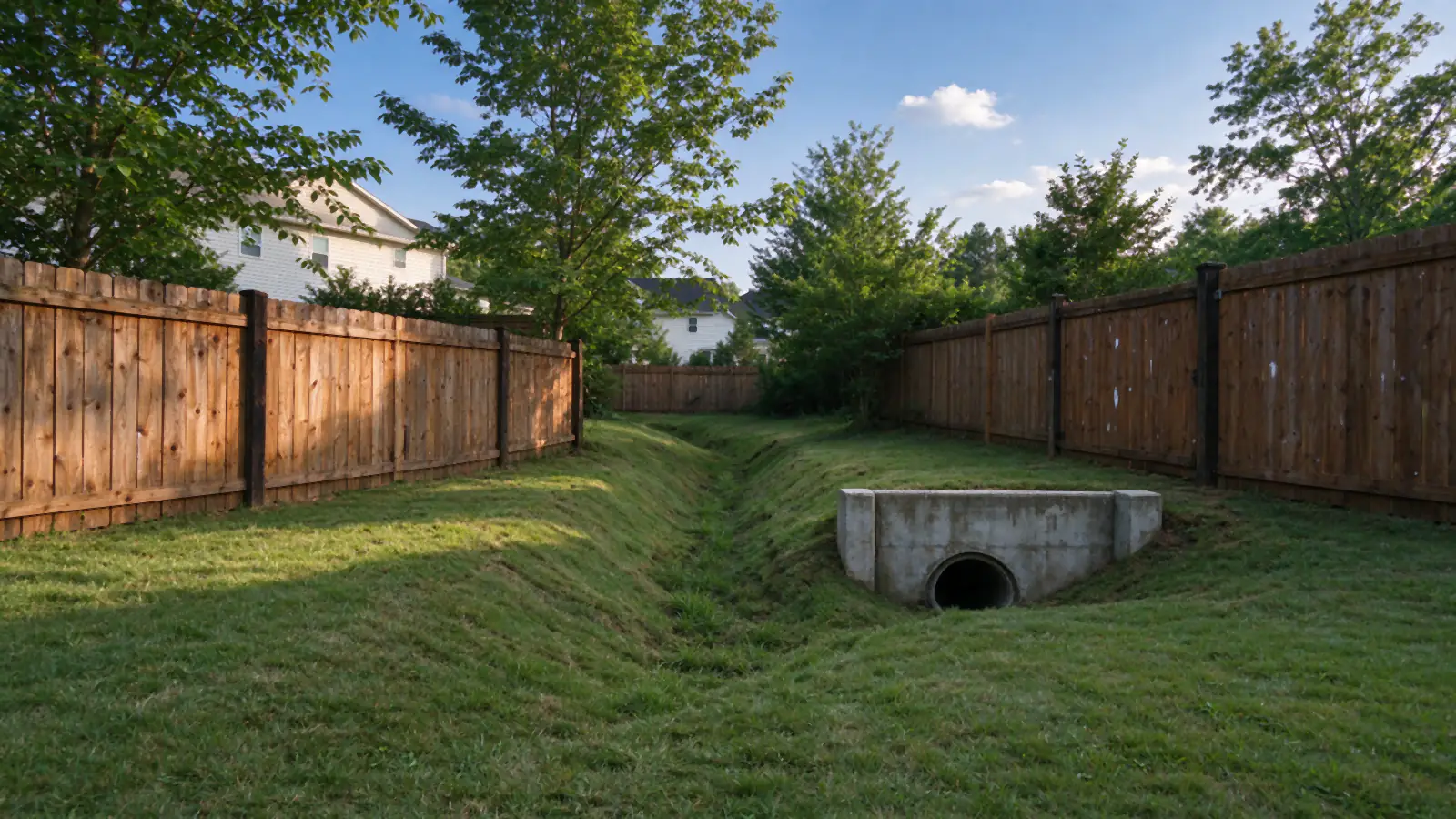
Sometimes. A fence can often be built within a drainage or utility easement, but only with the easement holder’s permission where it is required, and with the understanding that the holder can make you remove it if they need access. Fences that cross a drainage swale also have to let water pass. Check the plat before setting the line.
Upright Johns Creek Fencing checks easements on the plat during layout for every fence in Johns Creek and nearby cities. This guide explains what easements are, why they matter for fences, and how to handle them.
What an easement is
An easement is a right for someone else to use part of your property for a specific purpose. In north Fulton subdivisions, the most common are drainage easements, which carry stormwater through swales and pipes between houses, and utility easements, which hold power, gas, water, sewer, cable and phone lines. You still own the land, but the easement holder can use it for that purpose, including digging, maintaining and replacing what is there.
Easements are shown on the recorded plat, usually as strips along rear and side lot lines with their width noted. The survey guide explains how to get the plat in Johns Creek.
Why easements matter for fences
A fence in an easement can be in the way. If the holder needs to reach a pipe, regrade a swale or replace a utility line, they can generally require the fence to be removed, and the cost of putting it back usually falls on the property owner. A fence across a drainage swale can also block water, flooding your yard or a neighbor’s upstream.
Utility easements add another risk: buried lines. A Georgia 811 locate request is required before digging with powered equipment, and marks show where public lines run so posts can be placed around them. The 811 guide covers the details.
Permission letters
Some jurisdictions address fences in drainage easements directly. Forsyth County engineering guidance says that for a fence inside a drainage easement, written permission from the owner of the easement, such as the homeowners association or the developer, must be submitted, and no county permit is required for that. In Johns Creek and other cities, the easement holder and the HOA are the first people to ask. A written approval, kept with your permit paperwork, protects you if questions come up later.
Keeping water moving
Drainage swales are designed to carry runoff between lots. A fence that crosses one needs a way to let water and debris pass:
- An opening or a gate across the swale.
- A raised bottom, with the gap closed by something that lets water through.
- Posts set to the sides of the flow line rather than in it.
A solid fence with boards to the ground across a swale acts as a dam. After heavy rain, water backs up, and the fence itself can be pushed over by the pressure and debris.
Placing a fence along an easement
When an easement runs along the rear line, the usual choices are:
- Build the fence at the easement’s inner edge, keeping it out of the easement entirely. This leaves a strip behind the fence that still needs mowing.
- Build on the property line with the easement holder’s permission, accepting that the fence may have to come out someday.
- Build on the line with an opening or gate where the swale crosses, so access and drainage both work.
Which is right depends on the easement, the HOA’s rules and how much yard you want inside the fence. Your HOA may also have rules about fences in common drainage areas; the HOA approval guide covers what committees ask for.
Utility easements and posts
In utility easements, posts are placed around marked lines with hand digging near them. Some utilities have boxes, pedestals or transformers in their easements that need clearance for service; gates are often placed so crews can reach them. Overhead lines are a consideration too: Georgia 811 requires notice when work brings people or equipment within 10 feet of overhead power lines.
The Johns Creek permit and easements
The Johns Creek fence permit application includes a site plan, and drawing easements on it makes their relationship to the fence clear to the city, the HOA and the crew. The permit does not give permission to build in an easement; that comes from the holder.
A practical sequence
Pull the plat and note every easement on the fence line. Ask the HOA, and the easement holder where needed, for permission in writing. Request the 811 locate before digging. Lay out posts around swales and marked lines, and leave openings where water flows. Keep the approvals with your permit records. Questions about a specific easement can go to the number at the top of the page or the form below.