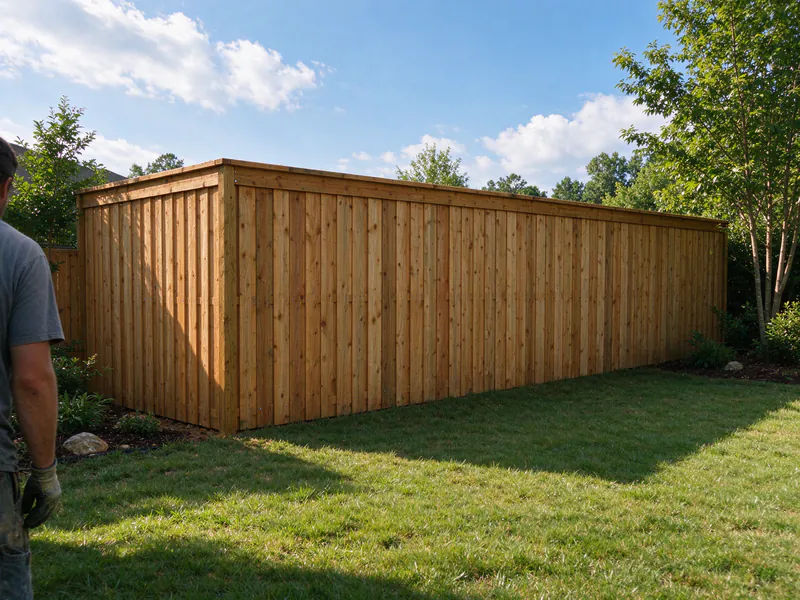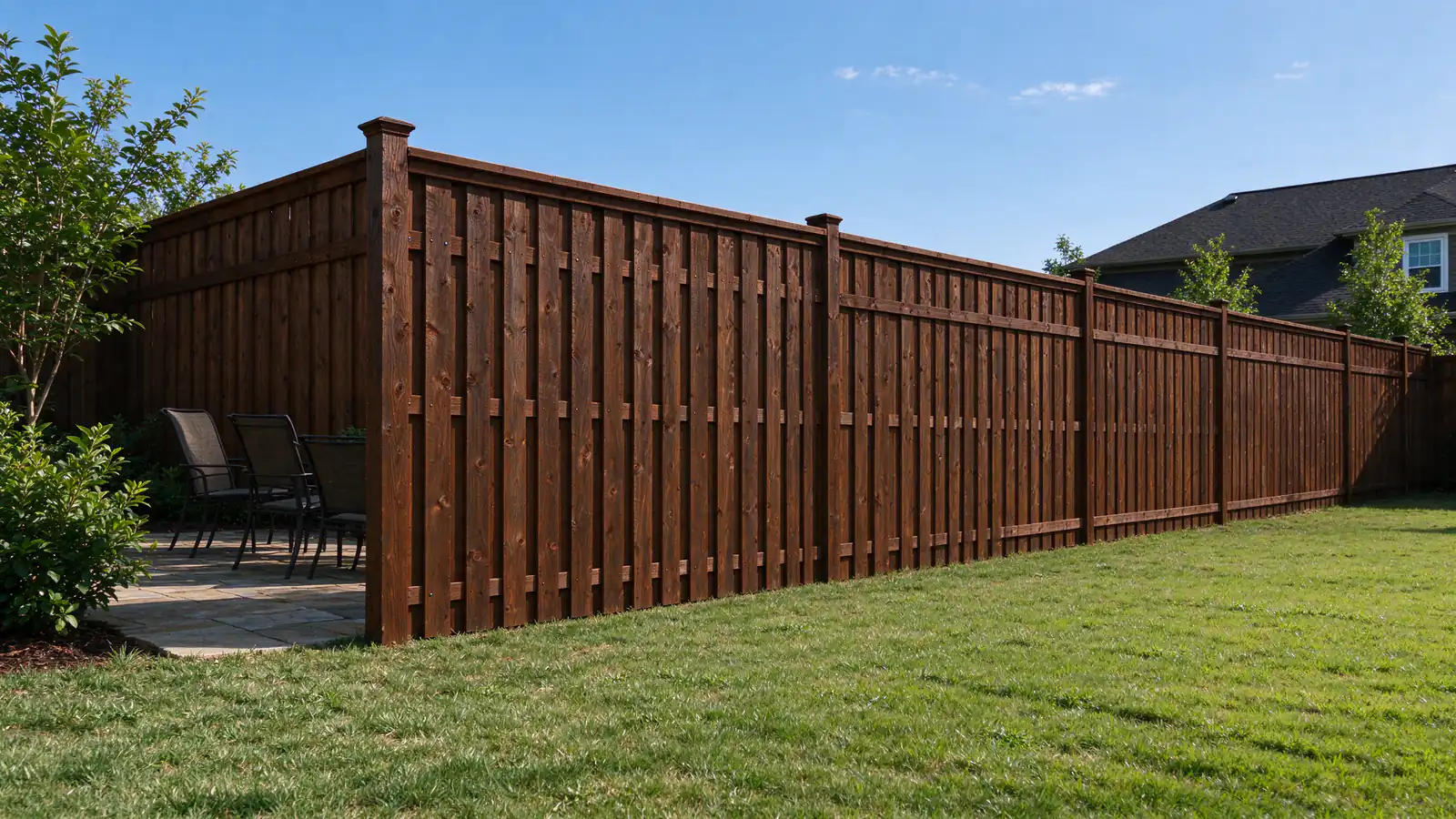
Upright Johns Creek Fencing builds privacy fences across Johns Creek and north Fulton in wood, vinyl and composite, with the work done by licensed and insured fencing contractors. A privacy fence has one job, screening the yard, but doing it well depends on three things people tend to underestimate: how tall the rules allow, how much wind a solid fence catches, and what happens where the ground drops away under it.
Most privacy fences in Johns Creek are 6 feet tall and run along rear and side lot lines, often shared with two or three neighbors. Some are 8 feet where a house sits close behind or a road runs along the back of the lot.
What happens on the first visit
The visit measures the line and the heights you want along it, and notes what you are screening: a neighbor’s deck, a road, a commercial lot behind the subdivision. That sometimes means a taller section in one place and a standard height elsewhere. The grade is checked along the whole line, because a privacy fence stepping down a slope can leave gaps at the bottom that defeat the purpose. Your HOA’s height, style and color rules are reviewed against the plan before anything is priced.
The estimate lists the material, height, post spacing and size, gates, any kickboards and the Johns Creek permit, plus tear-out of an old fence if there is one.
How tall a privacy fence can be
The Johns Creek zoning code limits fences and walls in residential districts to 8 feet from grade, with columns and ornaments allowed up to 3 feet above that (confirm with the city for your lot). Many HOAs set a lower limit, commonly 6 feet, and some restrict front-yard fences entirely. Nearby cities differ: Sandy Springs limits solid front-yard fences to 4 feet and side and rear fences to 8 feet, and Peachtree Corners allows 8 feet in rear and side yards but less on the street side of a corner lot. The HOA approval guide covers how to get a taller section approved when the screening need is real.
Wind load: why posts matter more on solid fences
A solid privacy fence behaves like a sail. Wind that would pass through a picket or aluminum fence pushes on every square foot of a privacy fence, and that force grows with height. The posts carry it into the ground, so a privacy fence needs heavier posts, closer spacing and deeper footings than an open fence of the same length. An 8-foot fence needs more than a 6-foot one, and a fence on an exposed lot, at the top of a slope or across an open field, needs more than one sheltered by trees.
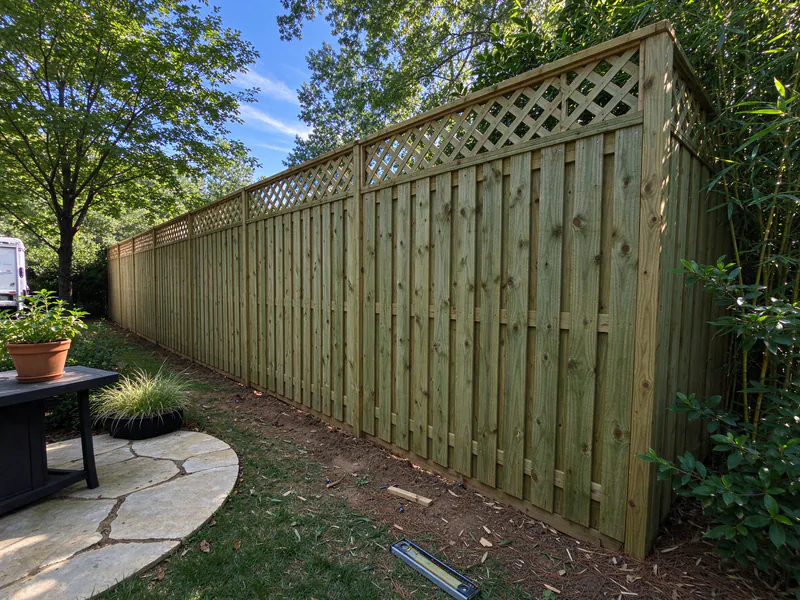
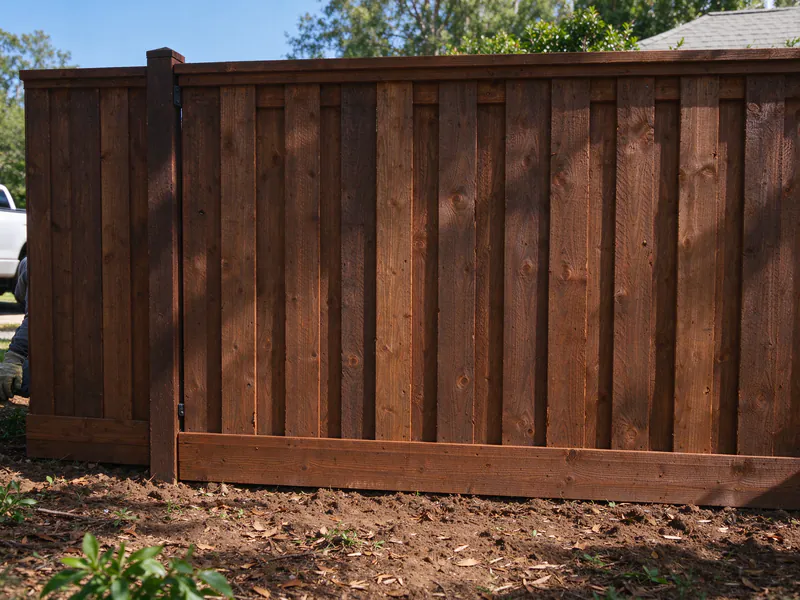
Board-on-board catches the most wind because it is completely solid. Shadowbox and other semi-privacy styles let some air through and load the posts less, while still blocking most views. When a lot is exposed, that can be the better choice. The board-on-board vs shadowbox guide compares the two.
Choosing a material
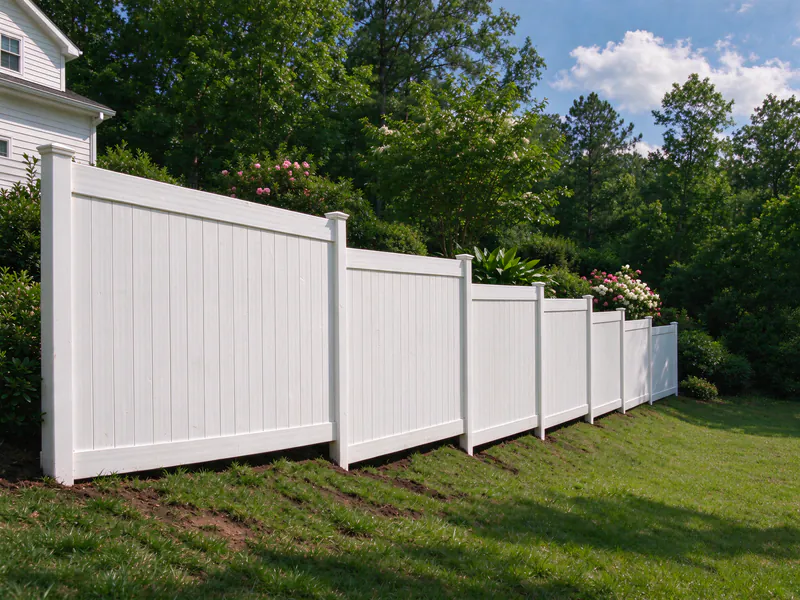
Wood is the most common privacy fence here. It costs the least to install, can be repaired one board at a time and is what most HOAs expect. It needs a stain every few years. Vinyl gives full privacy without staining and resists rot, but cracks under impact, can be hard to match years later and is not allowed for new fences in Sandy Springs. Composite boards look like wood and do not need staining; they cost more and are usually installed in level sections on aluminum or steel posts.
Lattice tops, cap rails and trim change the look without changing the screening much. The wood vs vinyl guide covers the long-term tradeoffs.
Closing the gaps on slopes
On a slope, privacy fences are either racked, with rails following the grade, or stepped, with level sections that drop at each post. Wood can do either. Most vinyl and composite privacy panels must be stepped, which leaves a triangle of open space under each section on the downhill side. Those gaps are filled with a kickboard, a short extension of the infill, or a gravel strip, depending on the material and what has to be kept in or out. The slope guide covers the options.
Which side faces out
The Johns Creek zoning code calls for fences along property lines to be built with the finished side facing the neighboring property (confirm with the city). On a standard privacy fence that puts the posts and rails on your side. Board-on-board and shadowbox look finished from both sides, which is one reason they are popular on shared rear lines. The finished side guide explains how it works on corner lots.
Gates in a privacy fence
Privacy gates are heavy, because they are solid, and they catch wind like the fence does. They hang on posts set deeper than line posts, with a diagonal brace that holds the latch side up and hinges rated for the weight. A gate frame that closes flush with the fence line keeps the screening continuous. Wide openings for mowers or trailers use double gates with a drop rod. More on gates is on the gate installation page.
What a privacy fence costs
A 6-foot wood privacy fence typically runs about $20 to $30 per foot installed in the Atlanta area, and vinyl about $20 to $40, before gates, tear-out and the $75 Johns Creek residential permit. Taller fences, board-on-board styles, exposed lots that need heavier posts and slopes that need kickboards push toward the high end. The fence cost guide shows how a full estimate adds up.
Privacy along shared lines
Privacy fences in Johns Creek subdivisions often run along lines shared with two or three neighbors. Talking to them before the fence goes up avoids surprises: where the line sits, which side faces them, and how any old fence will be removed. A survey settles questions about the line before posts are set, and the survey guide explains when one is worth it.