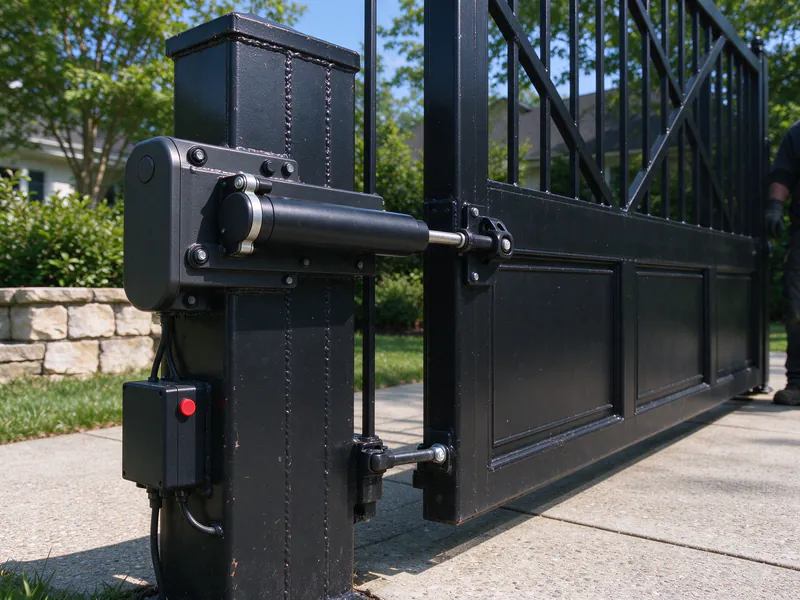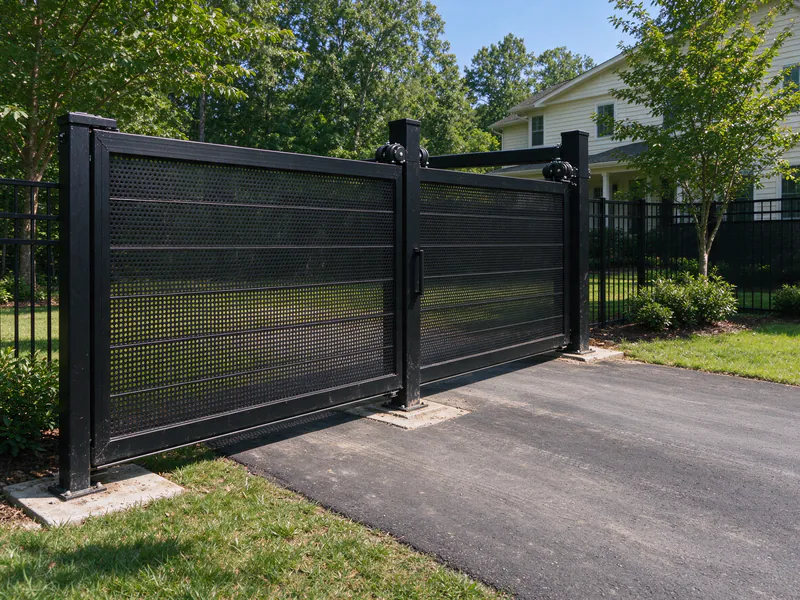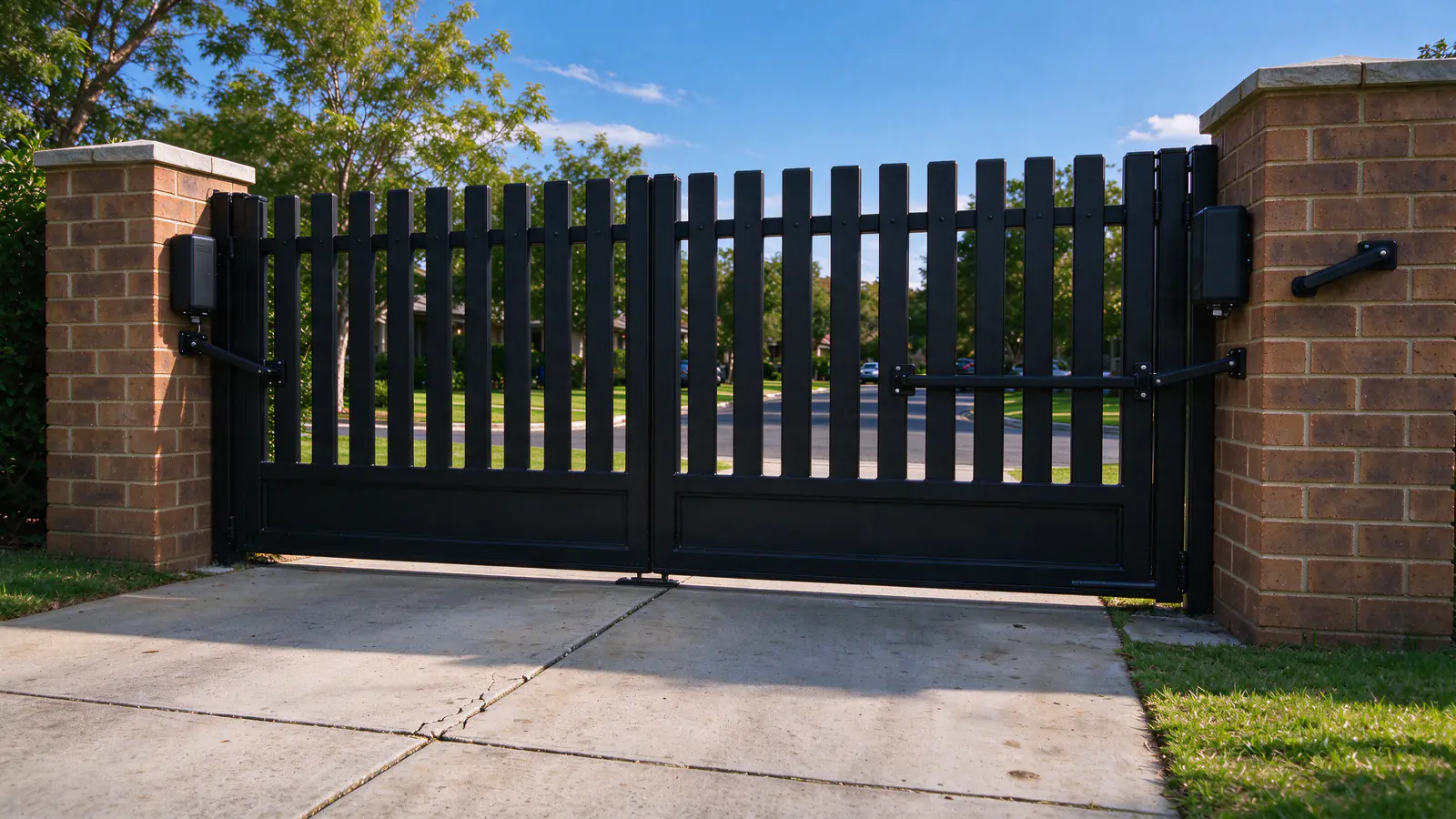
Upright Johns Creek Fencing installs automatic driveway gates and gate openers across Johns Creek and north Fulton, with the work done by licensed and insured contractors. An automatic gate is a fence gate plus a machine: an operator, power, controls and safety equipment that keeps the gate from closing on a person, a pet or a car. The gate and its posts still have to be built right, but the safety side is what separates a good installation from a dangerous one.
What happens on the first visit
The visit measures the driveway, its slope and the space beside it, which decides whether a swing or sliding gate fits. It checks the distance from the street against setback rules, where power can come from, and how people and vehicles will use the gate: residents, guests, deliveries, emergency access. If there is an existing gate, it is checked for whether it can be automated safely as it is.
The estimate lists the gate, posts or columns, the operator, entrapment protection devices, access controls, power, and the permits involved.
The safety standards behind automatic gates
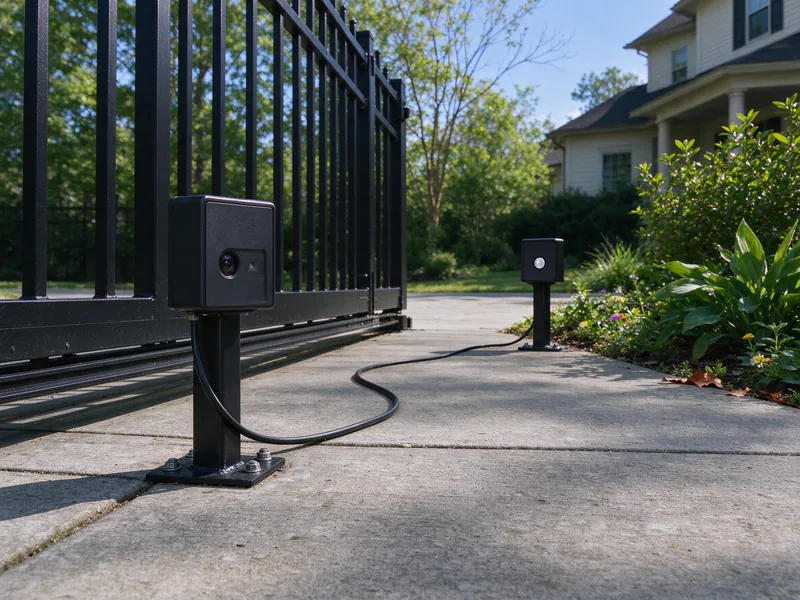
Automatic gate operators are listed to UL 325, the safety standard for door, drapery, gate and window operators. For vehicular gates, it requires entrapment protection that works in both the opening and closing directions of travel, and external protection devices must be monitored so the operator knows they are working. In practice that means photo eyes across the opening and contact or non-contact sensors on the gate edges, placed according to the type of gate and where someone could be caught.
The gate itself is built to ASTM F2200, the standard for automated vehicular gate construction. It covers details such as guarding or covering rollers on sliding gates, keeping protrusions off the bottom of swing gates, and limiting openings where hands could be trapped. An existing gate that was not built for automation often needs changes before an operator can be added. Model building codes reference both standards for automated vehicular gates.
Swing or slide
Swing gates need a clear arc on the side they open toward, and the leaves have to clear the driveway through their whole swing. On a level driveway with room, they are simple and look traditional. Many Johns Creek driveways slope, and a swing gate opening uphill hits the pavement partway open.
Sliding gates roll sideways into the space beside the opening, which needs to be roughly as long as the gate itself. A track gate rolls on wheels along a track across the driveway; a cantilever gate hangs from rollers on posts beside the opening and never touches the driveway, which suits sloped or uneven paving. The swing vs sliding gate guide compares them in detail.
Setbacks and where the gate sits
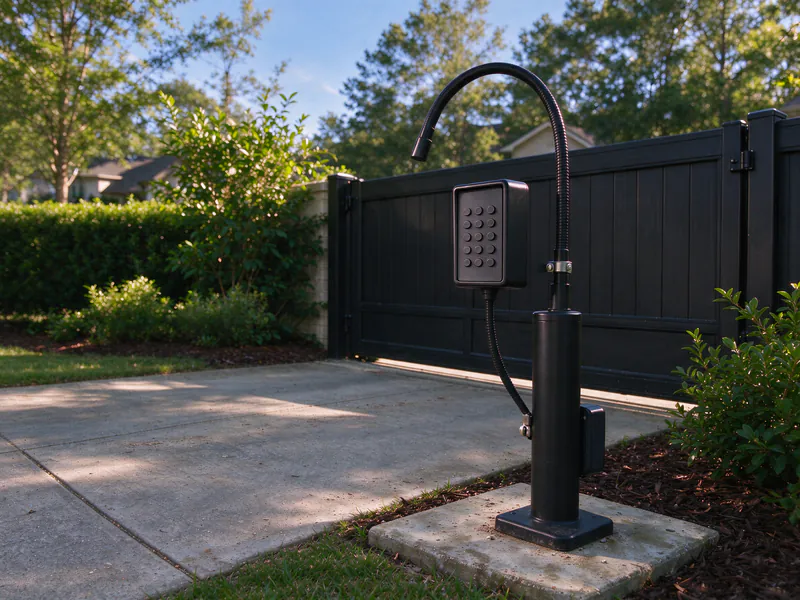
Setbacks often decide where the gate goes. The Johns Creek zoning code keeps any part of an automobile gate 20 feet from a public right-of-way (confirm with the city), which also gives a waiting car room to pull off the street. In Sandy Springs, gates must open inward and sit at least 30 feet from the edge of pavement, stand-alone driveway gates need masonry piers on both sides, and vehicular and electronic gates are reviewed by both the Building Division and the Fire Marshal’s Office. Keypads and intercoms are placed where a driver can reach them without stopping in the street; Milton has its own rule for how far a gate keypad sits from the right-of-way (confirm with the city).
Power, controls and access
Operators need power at the gate, either a line run from the house or, for some gates, solar power with a battery. Low-voltage wiring connects sensors and controls. Access can be by remote, keypad, intercom or a combination, and a vehicle exit sensor can open the gate automatically for cars leaving. Every operator has a manual release so the gate can be opened by hand in a power outage, and many can run on battery backup for a time. Fire and emergency access is planned with the local requirements.
Electrical work for the operator may need its own permit. Sandy Springs, for example, requires an electrical permit for any fence or gate that includes electrical equipment.
Building a gate that can be automated
An operator cannot fix a gate that sags or binds. The gate needs posts or columns sized for its weight and the operator’s force, set in deep footings, and a frame that stays square. Hinges and rollers have to move freely. The gate installation page covers posts and frames, and the sagging gate guide explains what goes wrong with manual gates that later get automated.
Living with an automatic gate
Safety devices only protect people when they work, so photo eyes and edges are tested regularly, and the gate is never operated while anyone is in its path. Children should not play near an automatic gate or with its remotes. Leaves, mulch and debris are kept off tracks and out of the swing path. A gate that reverses, stops short or makes new noises should be checked before it is used again.
What an automatic gate costs
Automatic gates are priced per project. Gate size and material, the operator, how far power has to run, access controls, the number of safety devices, masonry columns where required and permits all vary widely. The estimate lists each part separately.
Gates for HOAs and shared drives
Neighborhood entrances, amenity areas and shared private drives use automatic gates differently from a single home. Traffic is heavier, more people use the gate who have never been shown how it works, and emergency vehicles need dependable access. Operators are chosen for the number of cycles a day, vehicle loops or exit sensors handle outgoing traffic, and the controls are set up so a board or property manager can add and remove codes. Commercial and HOA work is covered on the commercial fencing page.
Gates in the fence around them
An automatic gate usually sits in a longer fence line, often aluminum or ornamental steel across the front of a property. The fence and the gate are planned together so heights, styles and posts line up, and so the gate’s columns can carry the operator. Where a pedestrian gate sits beside the driveway gate, it gets its own self-closing hardware so people do not walk through the vehicle gate’s path. The Johns Creek permit guide covers the approvals for the whole line.