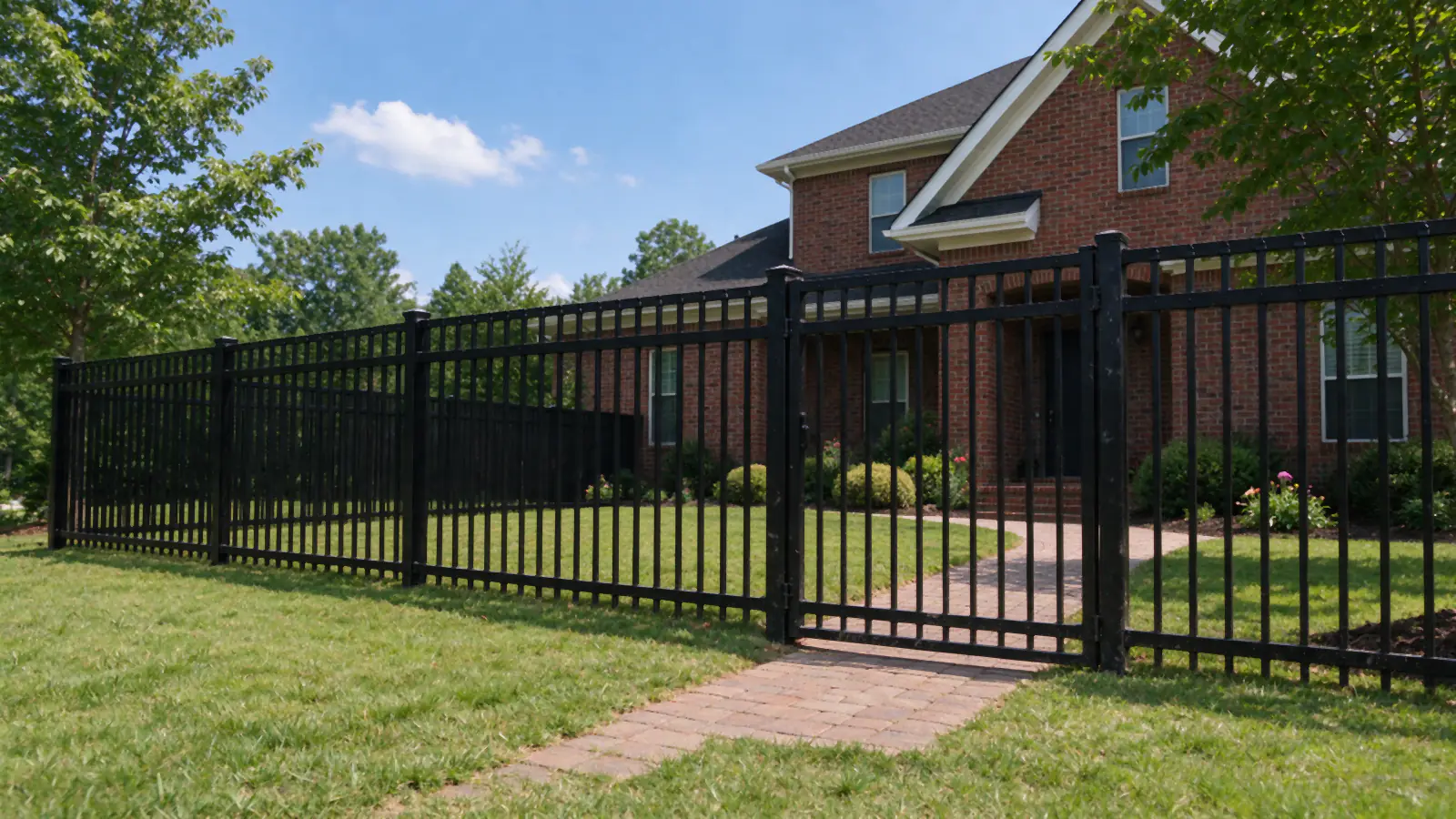
Upright Johns Creek Fencing installs aluminum and ornamental steel fences across Johns Creek and north Fulton, with the work done by licensed and insured fencing contractors. Aluminum fences look like wrought iron from the street, do not rust and keep the view open, which is why they are the usual choice for front yards, pools and backyards that look out over woods or a lake. They are also one of the materials that works where city codes limit what can face a street.
What happens on the first visit
The visit measures the line, checks the grade, and covers what the fence has to do: keep a dog in, meet pool barrier rules, mark a front-yard boundary or secure a driveway. That decides the height, the picket spacing and whether a pool-rated style is needed. Your HOA’s style and color rules are reviewed, and gate locations are marked with their clear openings. On sloped ground, the visit checks whether the chosen panel can rack across the grade or has to step.
The estimate lists panels, posts, gates and hardware, any decorative caps or finials, the Johns Creek permit and tear-out of any old fence.
Street-facing yards and front fences
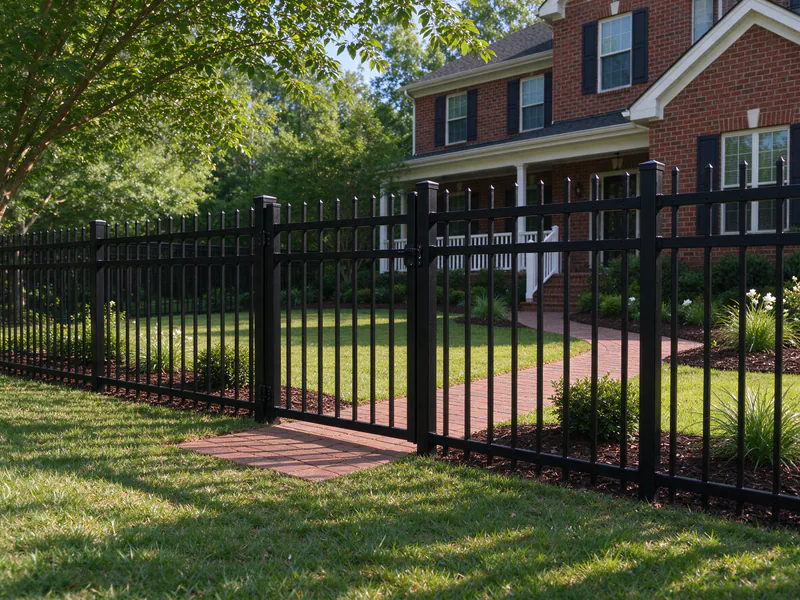
In Johns Creek subdivisions, the zoning code does not allow wire or plastic fencing, including chain link with slats, along a street right-of-way (confirm with the city). Aluminum is one of the materials that works there, and fences stay at least 3 feet off a public right-of-way. Corner lots also have a sight distance area near the intersection where fences and plantings cannot block a driver’s view. In nearby cities the rules differ: Sandy Springs requires masonry piers on street-facing runs and limits colors to black, white and earth tones, and Peachtree Corners lists aluminum that looks like wrought iron among its permitted materials.
Pool barriers
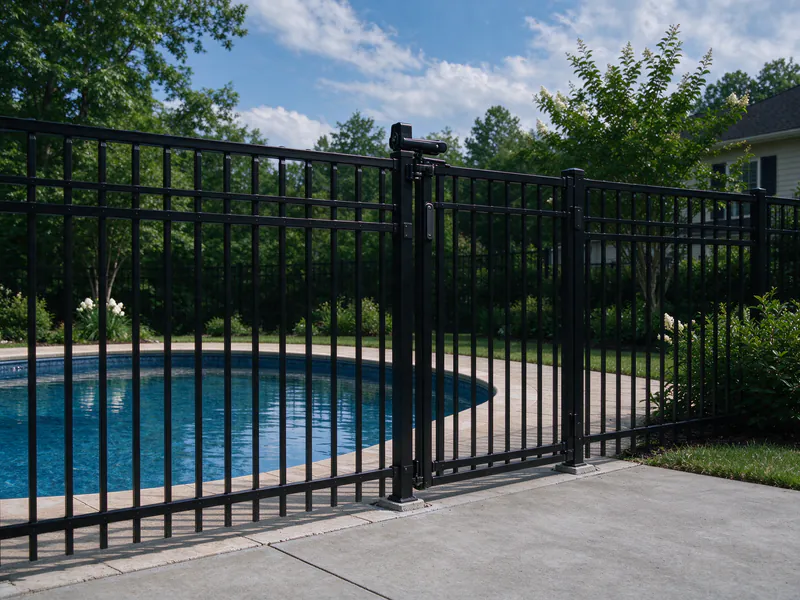
Aluminum is common around pools because it does not block the view of the water. A pool barrier is not just any fence, though. Under the International Swimming Pool and Spa Code as adopted with Georgia’s amendments, the barrier’s height, picket spacing, bottom gap and anything that could serve as a foothold all count, and gates must be self-closing and self-latching, with latch placement and swing direction set by the code. Pool-rated aluminum styles are designed for those requirements, and the fence is planned with the pool permit. The pool fence page and the Georgia pool fence rules guide cover the details.
Racking panels on slopes
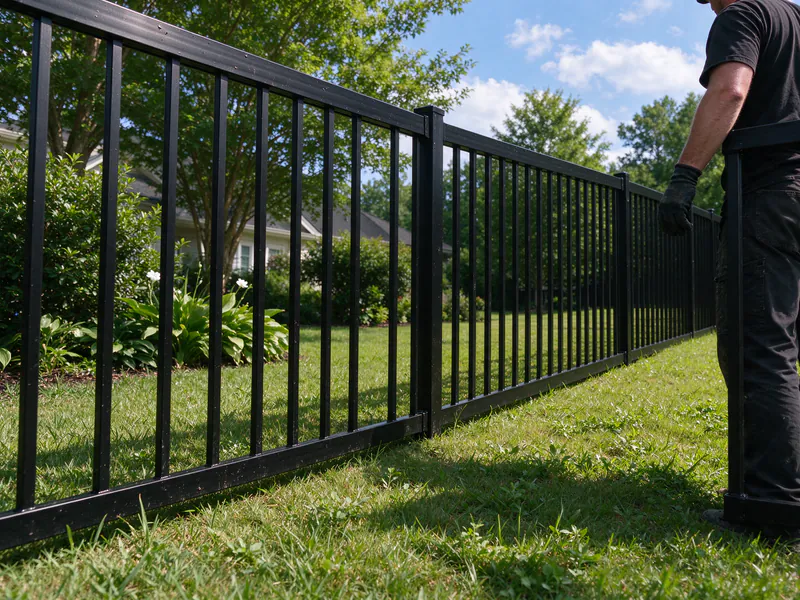
Many Johns Creek front and back yards slope. Many aluminum panels rack, which means the rails tilt to follow the grade while the pickets stay vertical, so the bottom of the fence follows the ground without gaps. Each panel has a rated racking limit. Where the slope is steeper than that, panels are stepped, staying level and dropping at each post, and the gaps underneath are closed for pools and pets. The slope guide explains the difference.
Aluminum or steel
Aluminum does not rust and is light enough to rack and to install quickly. Its powder coat can scratch or chalk over the years but the metal underneath does not corrode. Ornamental steel is stronger, which matters for long driveway gates, security fencing and places where people lean or climb, but it rusts wherever the coating is broken, so scratches and cut ends need touch-up. Both read as ornamental iron from the street. The aluminum vs steel guide compares them in more depth.
Gates in aluminum fences
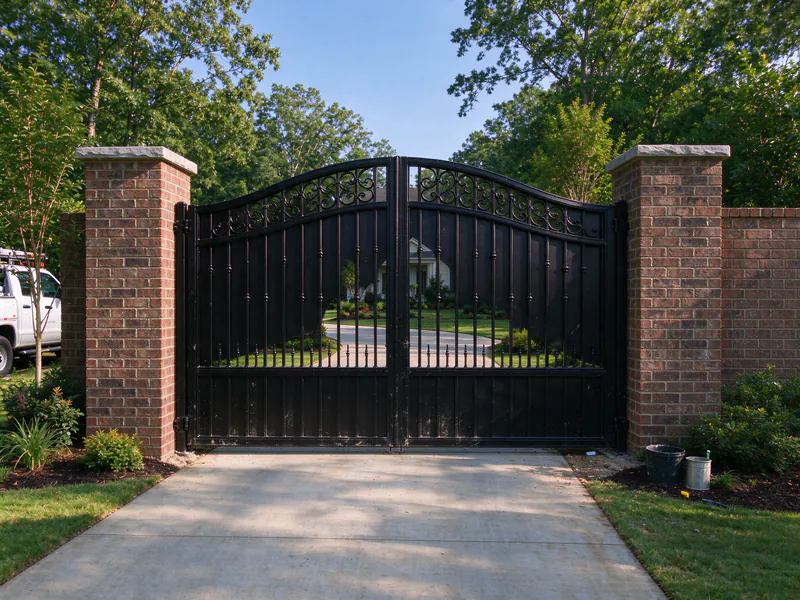
Aluminum walk gates are light and stay square on standard posts. Wider gates, especially driveway gates, may need heavier posts, a steel frame or a steel gate in a matching style. Pool gates get self-closing hinges and self-latching hardware, and are tested to close and latch from any open position. Driveway gates can be manual or automated; in Johns Creek the zoning code keeps automobile gates 20 feet back from a public right-of-way (confirm with the city). See the gate installation and automatic gate pages.
Keeping pets in
For most dogs, an aluminum fence with standard picket spacing and a small bottom gap works. Small dogs can slip between wider pickets, so puppy-picket panels with extra pickets at the bottom are used where needed. Dogs that dig need a barrier along the bottom, and jumpers need height. The dog fence guide has more.
What an aluminum fence costs
Aluminum typically runs about $25 to $50 per foot installed in the Atlanta area, before gates, tear-out and the $75 Johns Creek residential permit. Pool-rated styles, taller panels, decorative tops and finials, and slopes that need racking push toward the high end; a 4-foot flat-top fence on level ground sits toward the low end. The fence cost guide shows how an estimate adds up.
Heights, styles and finishes
Residential aluminum fences are most often 4 or 5 feet tall, with 6-foot panels used for security, larger dogs or where a taller pool barrier is wanted. Common styles are flat-top, where the top rail runs above the pickets; spear-top, where the pickets rise through the top rail and end in points; and three-rail designs with a decorative band near the top. Flat-top panels are the usual choice around pools and where children play, because they have no points to catch on.
Black is by far the most common finish in Johns Creek and is the safe choice where HOAs or nearby city codes limit colors; bronze, white and other powder-coat colors are available in many lines. Post caps and finials add detail without changing the function, and matching caps on gate posts keep the line consistent.
Mixing aluminum with other fence types
Many yards combine materials: an aluminum fence across the front and around the pool, and a wood or vinyl privacy fence along the rear line. Where two systems meet, the transition is planned at a post so each material has its own support and the heights line up cleanly. On corner lots, aluminum often runs along the street side where solid fences or chain link are limited, and the privacy fence starts behind the front of the house. The privacy fence page covers the screening side of that plan.