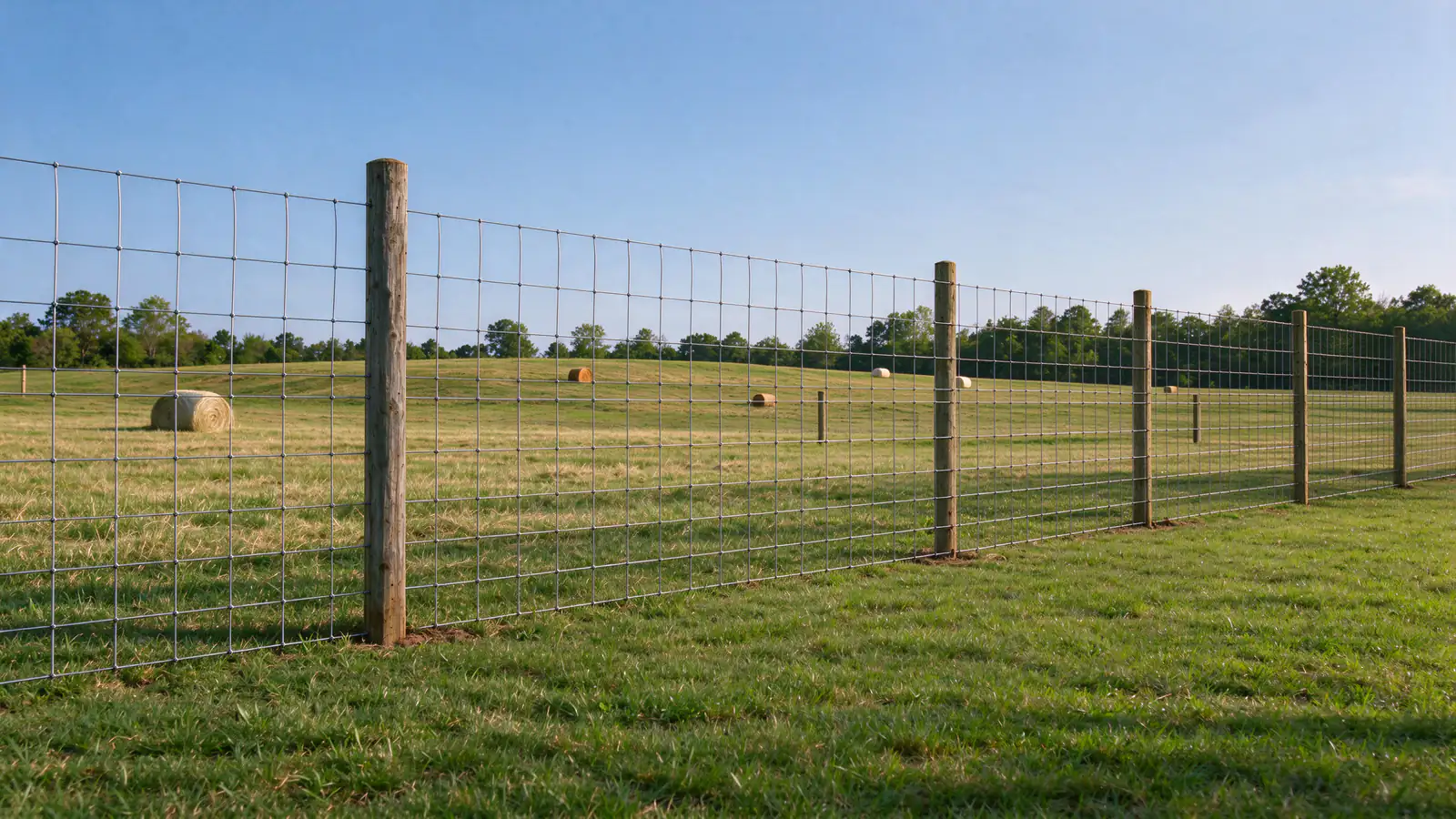
Upright Johns Creek Fencing installs farm fencing for small farms, hobby acreage, large gardens and rural lots across Johns Creek and north Fulton, with the work done by licensed and insured fencing contractors. Farm fences cover long distances over rolling ground, hold animals that push, climb and dig, and need gates that equipment can drive through. Most of their strength comes from how the corners and ends are built.
Johns Creek is mostly suburban, but parts of the city and much of neighboring Milton still have agricultural land, and the Johns Creek zoning code has an AG-1 district where agricultural fences are exempt from permit requirements (confirm with the city).
What happens on the first visit
The visit walks the property and asks what the fence is for: keeping goats, sheep or other livestock in, keeping deer out of a garden, marking a field, or a mix. It notes the terrain, wet areas and creek crossings, tree lines, and where tractors, mowers, trucks and trailers need to pass. Existing fences are checked for what can be reused. The zoning district is confirmed, because AG-1 agricultural fences, residential lots and properties next to subdivisions follow different rules.
The estimate lays out fields, lanes and gates, the fence type for each, bracing, gates and any permit.
Woven wire, rail and welded wire
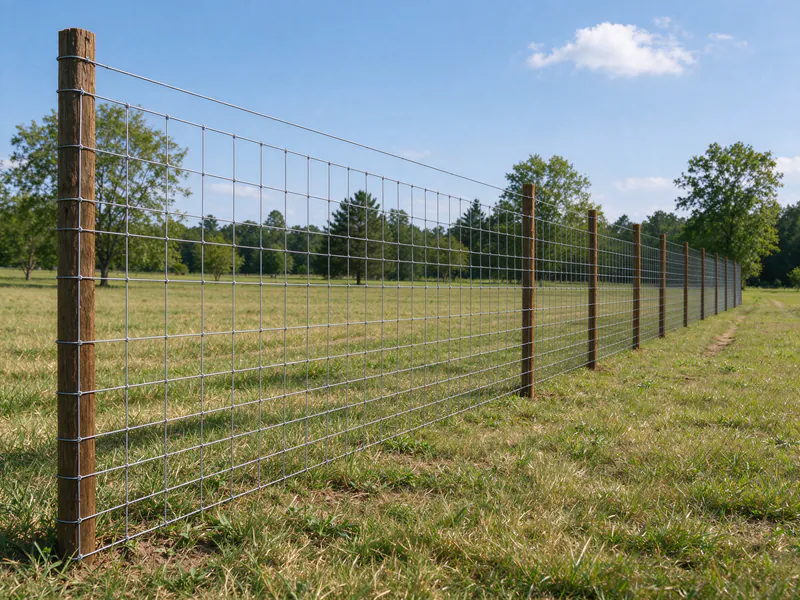
Woven wire has horizontal and vertical wires knotted together, with smaller openings near the bottom on livestock styles. It is strong, keeps most livestock in and lasts a long time when it is stretched tight between braced ends. It is the usual choice for goats, sheep and general livestock.
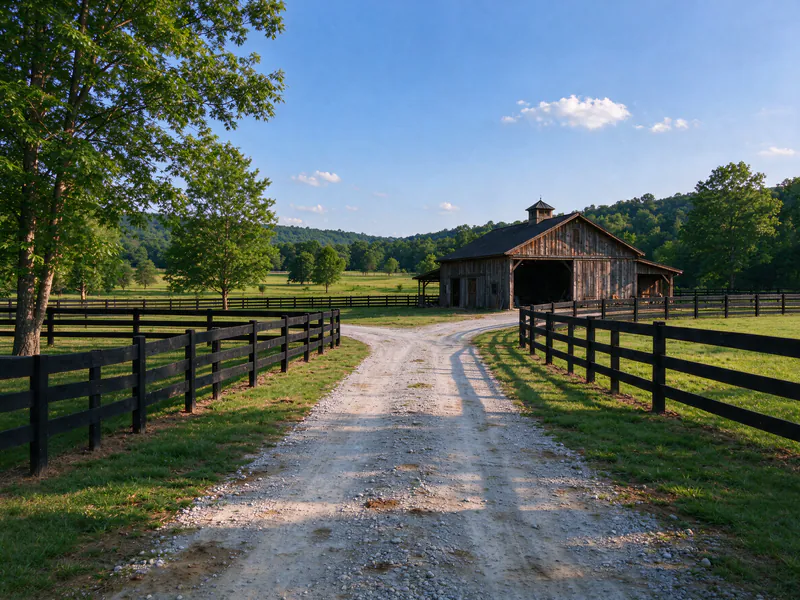
Ranch rail fences of two, three or four boards or rails give a traditional look along driveways and road frontage. With mesh added on the inside, they can contain animals; on their own, they mark a boundary.
Welded wire is lighter and cheaper, with wires welded rather than knotted. It suits gardens, small animal pens and temporary fencing, but it does not hold up to heavy livestock or long tensioned runs.
For horses, see the horse fence page, which covers the extra safety needs of horses.
Corners, ends and braces
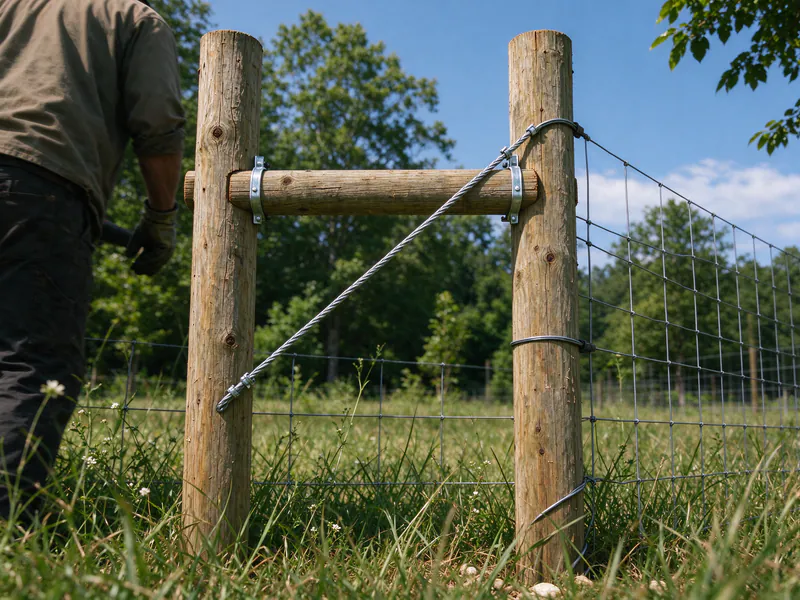
A woven wire fence is stretched from one end to the other, and every foot of that tension is held by the posts at the corners and ends. Those posts are braced, most often with an H-brace: two posts connected by a horizontal brace and a diagonal tension wire, which together resist the pull of the fence. Long straight runs get intermediate braces. When braces are skipped or undersized, corner posts lean in and the whole fence sags.
Line posts between braces are spaced for the fence type and ground. On Johns Creek’s clay soils, posts are set deep enough to stay put when the ground is wet.
Rolling ground and creeks
Farm fences follow the land. On rises and dips, the fence is attached so it stays close to the ground in low spots, where animals push under, and does not lift off the posts on crests. Creek crossings and drainage ways need their own treatment, because water carries debris that pushes fences out of line; swinging floodgates or separate sections that can be repaired after high water are common. The slope guide covers fences on grade.
Gates and lanes
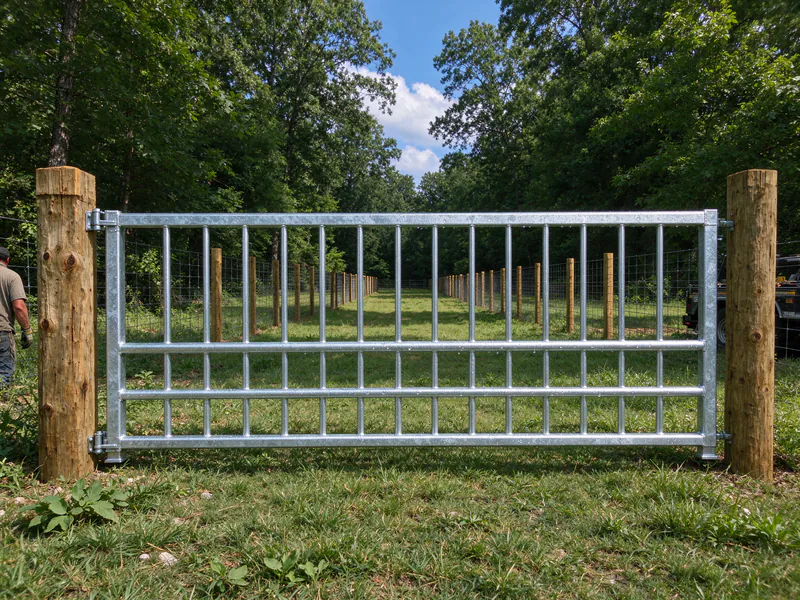
Field gates are sized for the largest equipment that passes, with room to swing on uneven ground. Hinge posts on long gates are braced like corners because they carry the same kind of load. Walk gates are added where people go through daily. Lanes between fields let animals and equipment move without opening every gate. More on gates is on the gate installation page.
Barbed wire and neighbors
Johns Creek does not approve barbed wire on single-family lots. The zoning code allows it for agricultural use in the AG-1 district, and for security strands in some other districts above a minimum height (confirm with the city). Where farm property backs onto subdivision lots, fence rules on the residential side can be stricter, and a woven wire or rail fence is often the better neighbor.
Dogs, deer and gardens
Dogs on acreage need the same things as dogs in a yard: no gaps at the bottom, enough height and gates that latch; see the dog fence guide. Deer jump, so garden fences meant to keep them out are taller than ordinary farm fence, often with welded or woven wire on tall posts. Small animals that dig need wire buried along the bottom, much as a chain link dog run does.
Upkeep
Farm fences are walked a few times a year and after storms. Fallen limbs are cleared, sagging sections are re-tensioned from the braces, loose staples are reset, and leaning posts are dealt with before they pull the line down.
What farm fencing costs
Farm fencing is priced per project from total length, the number of corners, braces and gates, the fence type, terrain and access. Long straight runs over open ground cost the least per foot; short runs with many corners, creek crossings and wooded edges cost more. The fence cost guide explains the general factors.
Choosing posts for farm fences
Wood posts are traditional for farm fences and hold staples well. They are rated for ground contact and set deep in tamped soil or concrete, with the largest posts at corners and gates. Steel T-posts are driven quickly between wood posts on long runs and cost less, but they do not hold tension on their own and are always paired with braced wood or steel ends. On stony ground, driven posts can refuse, so some line posts may need to be augered and set instead. The choice of post affects both the cost and how the fence holds up when animals push on it.
Phasing a larger property
Fencing a whole property at once is not always necessary. The perimeter usually comes first, then interior divisions, gardens and lanes as needs develop. Gates and braces are placed with the full plan in mind so later phases connect cleanly without rebuilding corners.