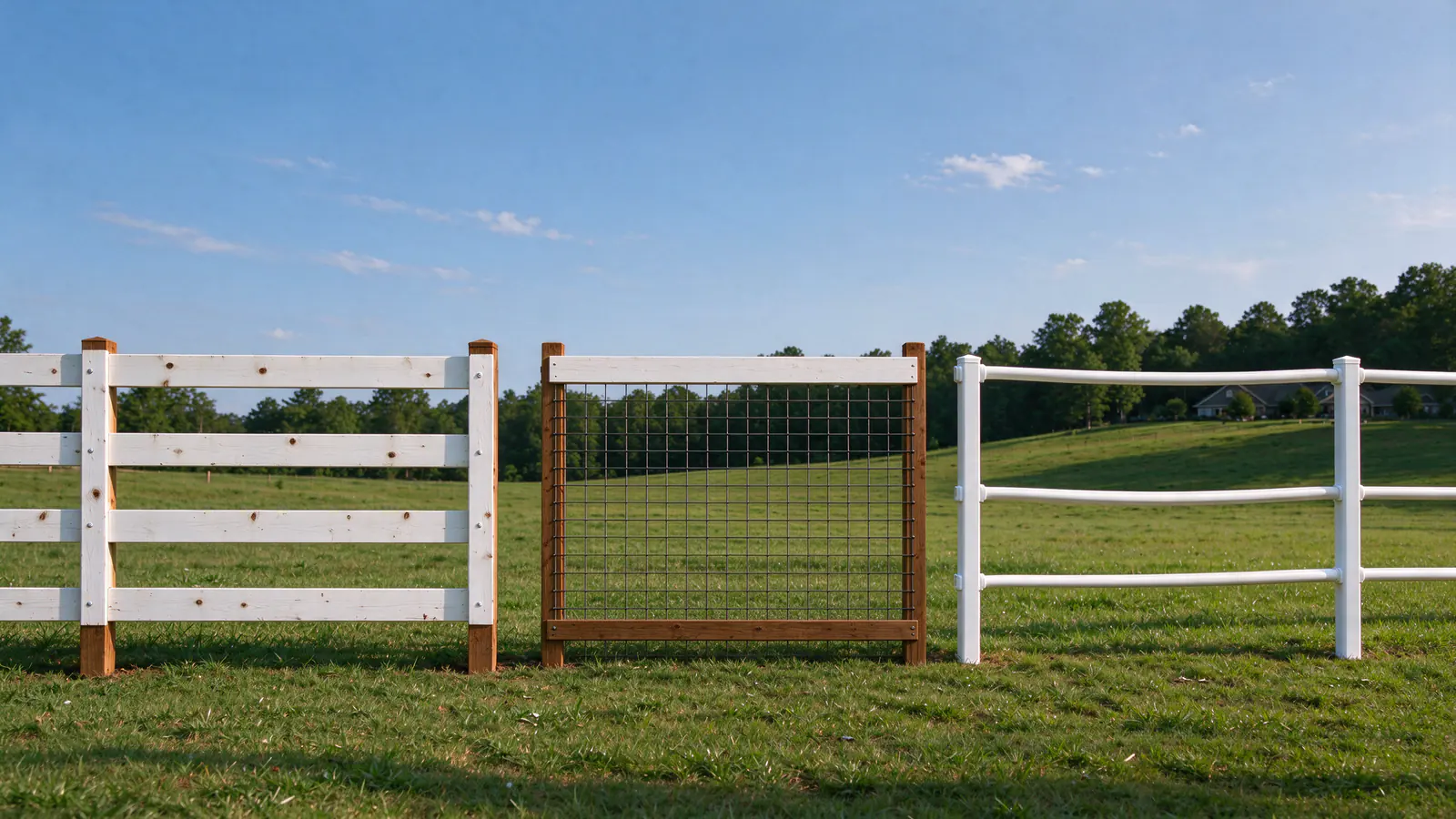
It depends on the horses and the space. Wood board fences are the most visible and the most traditional, but horses chew them and broken boards leave sharp ends. Horse-rated no-climb mesh has openings too small for a hoof and keeps dogs and wildlife out, but is harder for a horse to see without a top board. Polymer rail flexes on impact and is not chewed. Electric wire is mostly added to another fence to stop leaning and chewing.
Upright Johns Creek Fencing builds horse fencing for pastures and paddocks across north Fulton, especially toward Milton. This guide compares the main materials.
What a horse fence has to do
A horse fence has a different job from a yard fence. It has to be:
- Visible: horses run, and a fence they can see clearly from a distance is one they avoid.
- Forgiving: a fence that gives a little when hit causes fewer injuries.
- Free of traps: no openings where a hoof or head can get caught, and no sharp edges.
- Strong enough: horses lean over fences to graze and rub on posts.
No single material wins on all four. Most farms combine them.
Wood board
Board fences, usually three or four boards on wood posts, are what most people picture. They are very visible, look classic along a road or drive, and are easy to repair one board at a time. The downsides: horses chew wood, boards crack when kicked or hit and can leave jagged ends, and painted or stained boards need recoating. Boards go on the horse side of the posts so pressure pushes them into the posts rather than off. Posts are ground-contact rated and set for the soil; the post depth guide covers how.
No-climb mesh
Horse-rated woven mesh has small openings, often 2 by 4 inches, so a hoof cannot go through. That prevents a common leg injury with wider wire. It also keeps out dogs, coyotes and deer. Mesh is less visible than boards, so a top board or rail is usually added. It depends on tension, so braced corner and end assemblies are essential; when they move, the mesh sags.
Polymer rail
Polymer or vinyl-coated rail systems flex when a horse hits them and spring back, and horses do not chew them. They are visible, especially in white, and need little upkeep beyond checking tension. They cost more up front than board. Some systems use coated wire strands; others use flat rails that look like boards.
Electric
Electric tape, rope or wire is rarely used alone for horses on permanent lines here. It is most often run on offset brackets inside a board or mesh fence to stop leaning, rubbing and chewing. It needs a charger, grounding and regular checks, and it is quoted only when requested.
What to avoid
- Barbed wire: widely discouraged for horses because of the cuts it causes. Johns Creek’s zoning code does not approve barbed wire on single-family lots (confirm with the city).
- Wide-opening field wire: openings large enough for a hoof can trap a leg.
- Decorative split rail without mesh: built to mark a boundary, not to hold a horse.
- Unprotected T-post tops: cover them with safety caps if used.
Comparing the options
| Material | Visibility | Impact | Chewing | Keeps out dogs | Upkeep |
|---|---|---|---|---|---|
| Wood board | High | Breaks, can splinter | Yes | No | Boards and coating |
| No-climb mesh | Moderate, better with top board | Some give | No | Yes | Tension |
| Polymer rail | High | Flexes | No | No | Tension |
| Electric offset | Low alone | Deters contact | Deters | No | Charger and checks |
Paddocks vs pastures
Small paddocks and round pens see the hardest use, because horses move faster and turn tighter near the fence. They get the strongest, most visible fencing, often boards or polymer rail with mesh, and posts set closer together. Large pastures can use mesh with a top board over long runs, where horses rarely hit the fence at speed.
Terrain
North Fulton pastures roll and often include creek crossings and low, wet ground. Mesh and polymer rail follow uneven ground well; boards can be racked or stepped. Wet ground calls for deeper posts and drainage, and a damaged section is repaired before horses are turned out beside it. Creek crossings may need a floodgate or a separate panel that swings or breaks away in high water. The slope guide covers fences on grade.
Gates
Pasture gates need to be wide enough for tractors, mowers and trailers, with hinge posts braced like corners. Gates used daily should have latches a person can work with one hand while leading a horse. A gate that sags drags and stops latching. The gate installation page covers hardware.
Local rules
Milton has rules on the look and location of equestrian fences, and Johns Creek’s AG-1 district treats agricultural fences differently from residential ones (confirm with each city). The Milton page covers what applies there.
How to decide
Choose board where looks and visibility matter most and you accept upkeep. Choose mesh with a top board where dogs and wildlife are a concern or foals are present. Choose polymer rail where chewing and impact injuries matter most. Many farms use board along the road, mesh on pasture lines and polymer rail in paddocks. Farm fencing covers other livestock, and questions about a specific property can go to the number at the top of the page or the form below.