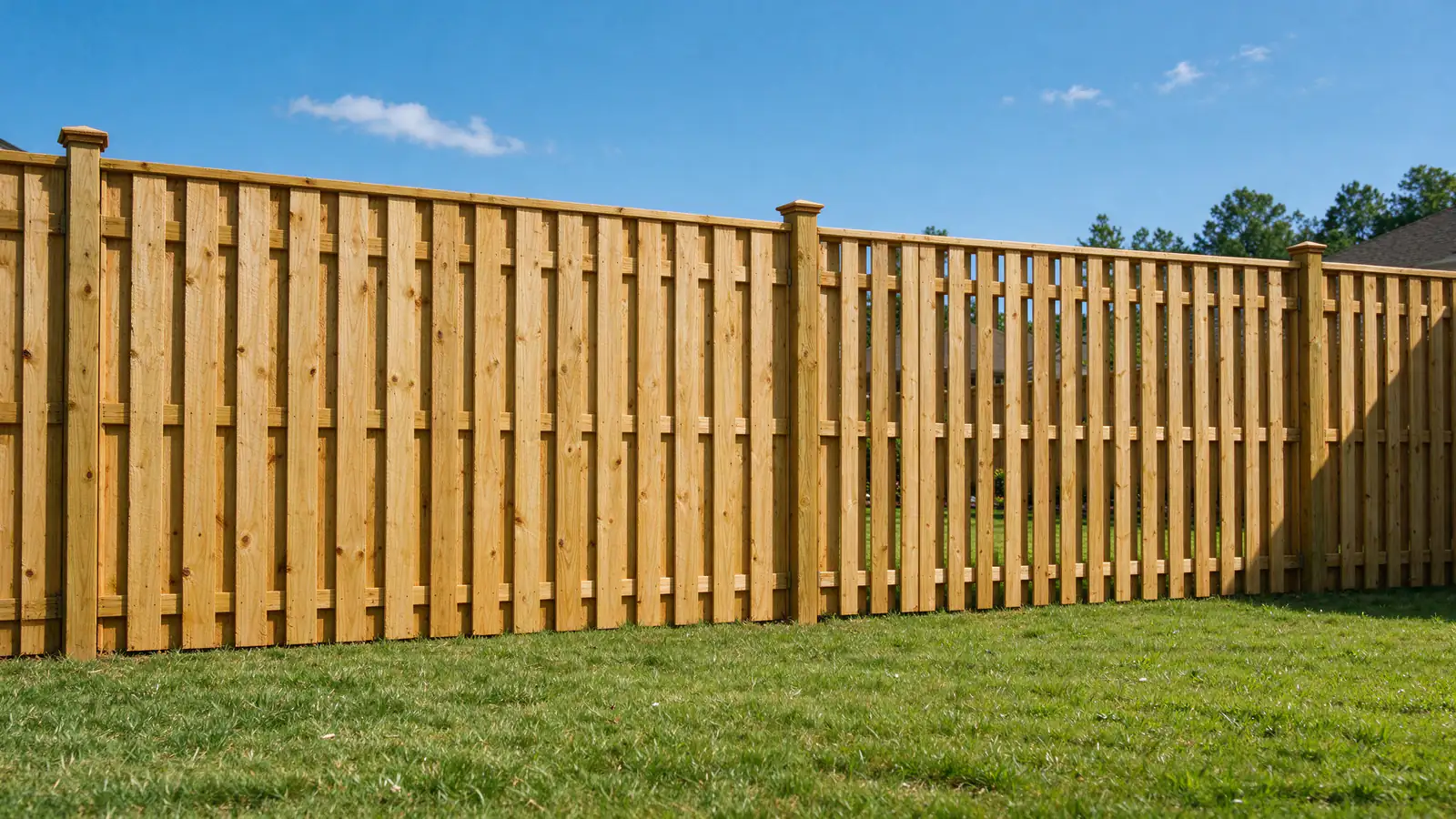
Board-on-board overlaps its boards so there are no gaps even after the wood dries and shrinks, giving full privacy and a solid look from both sides. Shadowbox alternates boards on each side of the rails, so it looks the same from both yards and lets some air through, but you can see through it at an angle. Board-on-board catches more wind and uses more lumber.
Upright Johns Creek Fencing builds both styles across north Fulton, usually as 6-foot privacy fences in pressure-treated pine. This guide explains how they differ and when each makes sense.
How each is built
Both start the same way: posts set in concrete, with two or three horizontal rails between them.
Board-on-board puts a first layer of boards on the rails with gaps between them, then a second layer over the gaps, each board overlapping its neighbors by an inch or so. The result is a solid wall of wood with a ridged texture.
Shadowbox puts boards on one side of the rails with gaps between them, then fills those gaps with boards on the other side of the rails. From straight on, it looks solid. From an angle, you can see through the staggered gaps, and air passes between them.
Privacy after the wood shrinks
Pressure-treated pine shrinks as it dries after installation. On a simple stockade fence, where boards sit edge to edge, that shrinkage opens gaps between every board. Board-on-board avoids this because the boards overlap; even after shrinkage, there is still wood behind every gap. Shadowbox stays opaque head-on but has always had see-through angles by design.
If a particular line faces a neighbor’s deck or a window and complete screening matters, board-on-board is the safer choice there.
Wind load
A solid fence acts like a sail. Board-on-board is completely solid, so wind pushes on every square foot and that force goes into the posts. Shadowbox lets some air through and loads the posts less. On exposed lots, such as yards at the top of a slope or backing onto open ground, that difference is worth considering, and either style needs posts and footings sized for its load. The privacy fence page covers wind load in more detail.
Looks from both sides
Both styles look finished from both sides, which matters in Johns Creek, where the zoning code calls for the finished side of a fence along a property line to face the neighbor (confirm with the city). Shadowbox looks identical from both yards. Board-on-board looks nearly the same from both, with the rails visible from one side between the board layers. The finished side guide explains the rule.
Lumber and cost
Board-on-board uses the most lumber per foot because of the overlap. Shadowbox uses somewhat less. Both use more than a stockade fence. Labor is similar. A 6-foot wood privacy fence typically runs about $20 to $30 per foot installed in the Atlanta area, with board-on-board toward the upper part of that range. The fence cost guide explains the other factors.
Durability
Both styles share the same weak point: the posts at the soil line. Board-on-board’s extra boards add weight and wind load, so post size and footing depth matter slightly more. Shadowbox’s gaps let boards dry faster after rain. Either way, ground-contact rated posts on a gravel base with crowned concrete do more for the fence’s life than the board style does. The wood fence lifespan guide covers what decides it.
Staining
Both styles have more surface than a stockade fence, and board-on-board’s overlaps create edges that need stain worked in. Spraying and back-brushing reach into the gaps. New pine is stained once it dries enough to absorb water; the new fence staining guide covers timing.
HOA fit
Many Johns Creek HOAs specify one of these two styles, or allow either because both look finished from the neighbor’s side. Check the covenants before choosing; some require a cap rail or a specific board width.
How to decide
Choose board-on-board where full privacy matters on every line and the lot is sheltered. Choose shadowbox where a neighbor-friendly look, some airflow and slightly lower lumber cost matter, or where the lot is exposed to wind. Many fences use board-on-board along the line that needs the most screening and shadowbox elsewhere. The wood fence page covers both, and questions about a specific yard can go to the number at the top of the page or the form below.
Gates in each style
Gates take the most abuse on any wood fence, and the board style changes their weight. A board-on-board gate carries two layers of pickets, so it is heavier and more likely to sag unless the frame is braced and the hinge post is set deep. A shadowbox gate is a little lighter and still matches the fence from both sides. Either way, a steel frame or an anti-sag kit, heavy strap or tee hinges and a post sized for the gate keep it square. The sagging gate guide explains why gates drop and how they are fixed, and the gate installation page covers widths and hardware.
Cap rails and trim
A cap rail along the top and a trim board below it give either style a finished line and shed rain off the board ends, which slows checking and rot at the top of each picket. Board-on-board with a cap looks the most solid; shadowbox with a cap keeps its airy look while tying the alternating boards together.