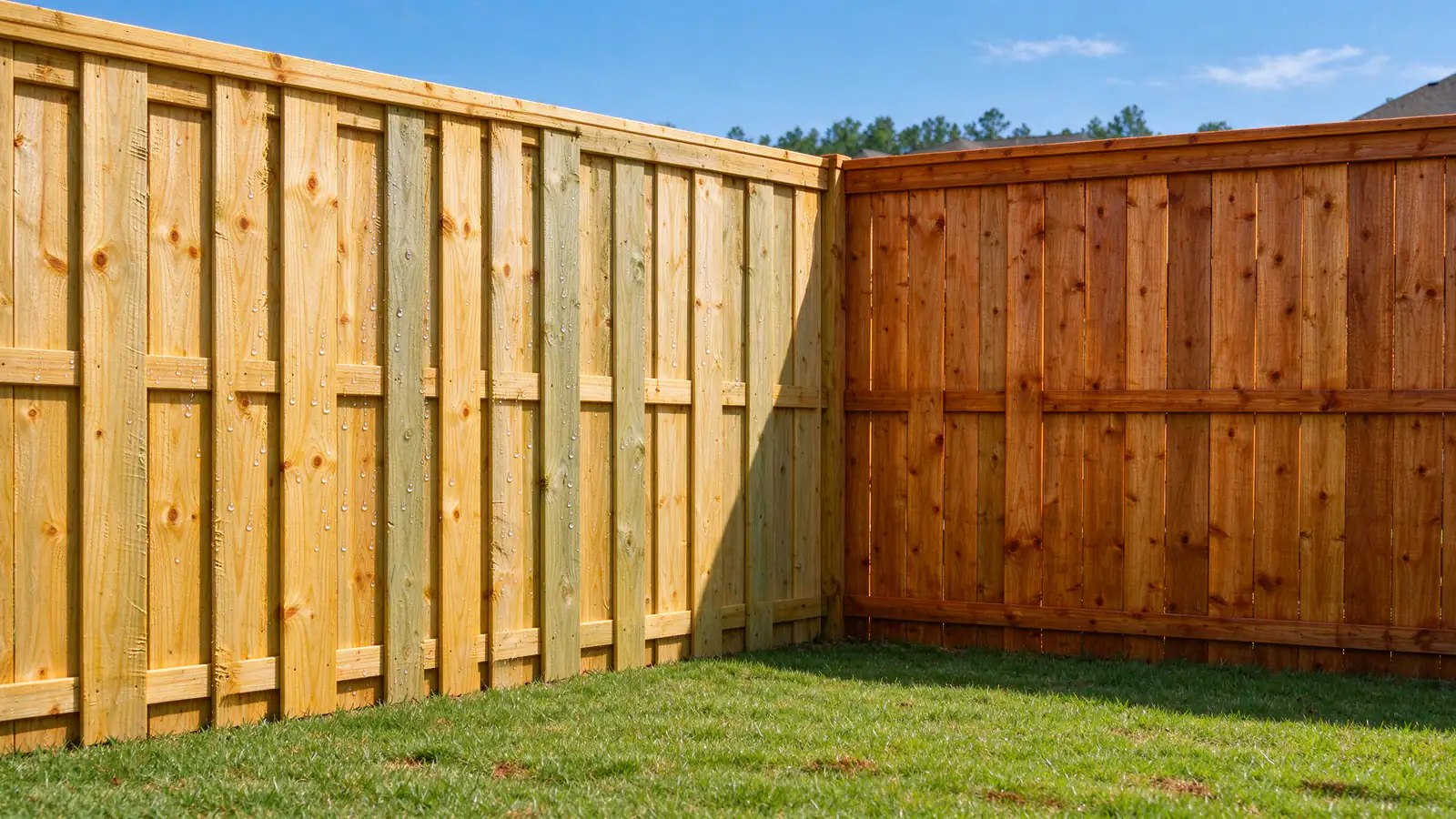
As soon as the wood is dry enough to absorb stain, and not before. New pressure-treated pine is wet when it is installed, because the treatment is forced into the wood with water. Stain applied too early sits on the surface, dries blotchy and peels. Depending on sun, shade, humidity and the season, it usually takes several weeks to a few months for a new fence to dry enough. A simple water test tells you when it is ready.
Upright Johns Creek Fencing offers fence staining across north Fulton for new and older wood fences. This guide covers timing, products and how often to restain.
The water drop test
Sprinkle a few drops of water on a board in several spots, including shaded ones.
- Water beads up and sits: the wood is still too wet or the surface is closed. Wait.
- Water soaks in within a few minutes: the wood is ready for stain.
Test boards on the sunny and shady sides. A fence in full sun may be ready weeks before the run under a stand of oaks.
Why waiting matters
Penetrating stain works by soaking into the surface fibers. Wet wood has no room for it; the stain cannot get in and dries on top, where it wears and flakes unevenly. Once the wood dries, the pores open and the stain soaks in evenly. Waiting is not lost time: the treatment still protects the wood against rot and insects in the meantime.
What changes drying time
- Sun: boards in full sun dry fastest.
- Shade: boards under trees or on a north side dry slowly and may grow mildew first.
- Season: a fence built in summer dries faster than one built in a damp winter.
- Humidity: Georgia’s humidity slows drying compared with drier climates.
- Lumber type: kiln-dried after treatment (KDAT) lumber is dried at the mill and can often be stained sooner.
Weather windows
Stain goes on best on a dry day in moderate temperatures, with no rain expected for a day or so afterward. Hot afternoon sun can dry stain too fast and leave lap marks; early mornings or overcast days work better in summer. Pine pollen in spring coats everything with yellow dust that must be washed off first, and fall leaves do the same. Many owners in north Fulton stain in the drier stretches of fall or late spring.
Stain types
- Transparent: shows the most grain, protects the least from sun, and needs renewing most often.
- Semi-transparent: the most common for fences; tints the wood while letting grain show, with better ultraviolet protection.
- Solid: covers like paint while still soaking in somewhat; hides grain and color differences, and lasts longer between coats.
Oil-based penetrating stains soak in deeply; water-based stains clean up easily and dry faster. Either works on a well-prepared fence. Colors may be limited by your HOA; the HOA approval guide covers what committees review.
Preparing the fence
New fences need little: wash off dirt and pollen and let the wood dry. Older fences need cleaning to remove gray surface fibers, mildew and algae, sometimes with a wood brightener, then time to dry. Loose boards and nails are fixed first, because stain will not fix them.
How it goes on
Spraying covers quickly, and back-brushing works the stain into the grain and the gaps between boards. On board-on-board and shadowbox fences, the overlaps and edges need extra attention; the board-on-board vs shadowbox guide explains the styles. Plants, siding and hardscape next to the fence are covered.
How often to restain
There is no fixed schedule. Semi-transparent stains on fences in full sun usually show wear first, often within a few years; shaded fences and solid stains last longer. Signs it is time: water no longer beads on the surface, color has faded unevenly, or the wood is turning gray. Restaining before the wood weathers badly keeps prep simple.
What stain does for the fence
Stain cuts the wetting and drying cycles that make boards cup, check and split, and it slows the graying caused by sunlight. It does not fix posts rotting at the soil line, which is where wood fences usually fail; the wood fence lifespan guide explains why. Sprinklers aimed away from the fence help stain and boards last.
New boards on an old fence
After a fence repair, new boards stand out against weathered ones. They follow the same rule as a new fence: let them dry, test with water, then stain. Staining the whole fence at that point, rather than only the new boards, evens out the color. A solid stain hides the difference best; a semi-transparent one will show it for a while. If many boards need replacing, the repair or replace guide may help first.
If you would rather skip staining
Some owners choose a material that never needs it. Vinyl and composite skip stain entirely, at a higher upfront price and with their own tradeoffs; the wood vs vinyl guide compares them.
Cost
Typical Atlanta-area ranges for fence staining run about $3 to $14 per foot, depending on height, both sides or one, the fence’s condition and the stain. The fence cost guide covers other factors, and questions about a specific fence can go to the number at the top of the page or the form below.