A solid fence near the road
Milton allows new opaque fences outside its 60-foot rural view shed only where they are not visible from main public roads at any time of year (confirm with the city).
Service area
Fences in Milton, GA: the city's fence permit and fees, rules on opaque fences seen from main roads, equestrian fence rules, gates and horse and farm fencing.
Last Updated:
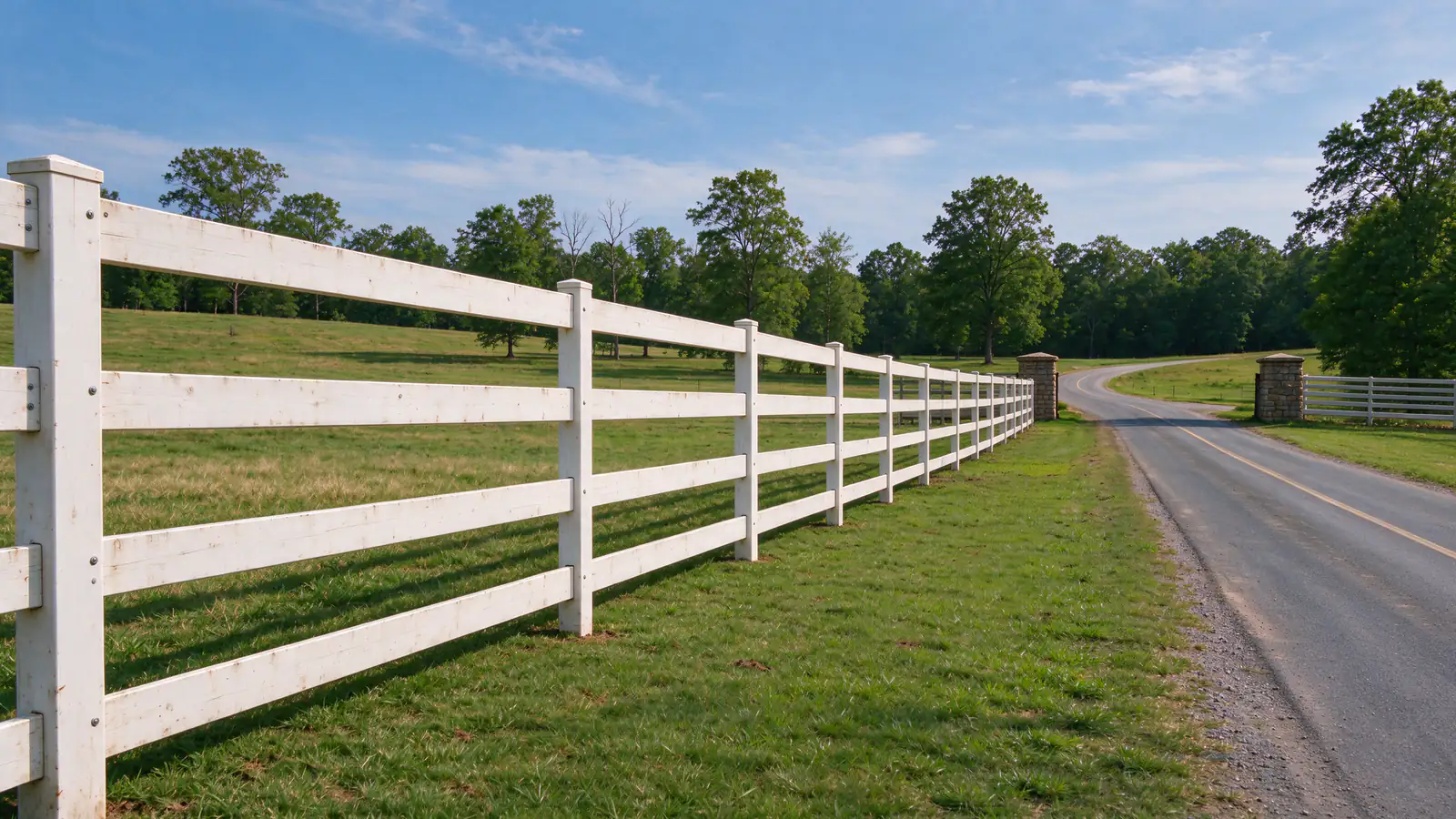
Milton allows new opaque fences outside its 60-foot rural view shed only where they are not visible from main public roads at any time of year (confirm with the city).
Milton has adopted rules on the look and location of equestrian fences (confirm with the city), so horse fencing starts with the city's requirements.
Milton sets a minimum distance between a private gate's keypad or intercom and the right-of-way (confirm the current figure with the city).
Height and opacity variances go to Milton's Board of Zoning Appeals, which has heard several fence requests.
Milton cares about what a fence looks like from the road, which makes it unlike any other city in north Fulton. Upright Johns Creek Fencing installs horse fences, farm fences and residential fences across Milton, north of Johns Creek and Alpharetta, through licensed and insured fencing contractors. Milton is the most rural city in north Fulton, with horse farms, pastures and large lots along its country roads, and its fence rules reflect that. The city protects the look of its roads with limits on solid fences, has its own rules for equestrian fences, and requires a permit to erect a fence. The rules here come from the city’s published news and fee schedule as summarized in public listings, because the city’s site could not be reviewed directly, so confirm each with Milton Community Development.
Milton’s City Council amended its fence regulations to streamline them and, in the city’s words, allow for a uniquely Milton look across the city. A central idea is the rural view shed along main public roads. Under the amended rules, new opaque fences are allowed outside the 60-foot rural view shed as long as they are not visible from main public roads at any time of year.
In practice, that means solid privacy fences generally go behind the house or deep in the lot, screened by trees that hold their leaves, rather than along the road frontage. Along roads, open styles such as board fences and rail fences keep the rural look. Confirm with the city how the view shed applies to your road and lot before planning a solid fence.
The same council action approved requirements on the look and location of equestrian fences. Milton’s Equestrian Committee has also weighed in on fence requests involving horses, including one where a homeowner sought an 8-foot opaque fence around a lot with draft horses, and the committee recommended alternatives. For horse property, the plan starts with the city’s current equestrian fence rules, then moves to the horse side: visibility, give on impact, no openings that trap a hoof, and braced corners. The horse fence page and the horse fence materials guide cover those details.
Milton lists erecting a fence among the projects that need a permit, along with decks and pools, and takes applications through its CityView online program. The city’s fee schedule lists a fence permit with a $100 site fee and a $25 administrative fee. Confirm current fees with the city when applying. Compare that with Johns Creek’s $75 permit and Roswell, where most fences need no building permit.
Many Milton properties have long driveways with gates. The council set a minimum distance from the right-of-way for an intercom or keypad outside a private gate, so drivers can stop without blocking the road; the planning commission considered 20 feet and the adopted figure reported was 15 feet, so confirm the current requirement with the city. Gates themselves are placed with room for a vehicle to pull fully off the road. On sloped driveways, sliding and cantilever gates often fit better than swing gates; see the swing vs sliding gate guide and the automatic gate page.
When a property needs something the rules do not allow, such as a taller or more opaque fence, the request goes to Milton’s Board of Zoning Appeals as a variance. The board has heard several fence requests. A variance takes time and has no guaranteed outcome, so plans that fit within the rules are usually the faster path.
Milton’s land rolls, and many properties have creeks, ponds and wooded bottoms. Farm fences and horse fences follow the land, with braced corners and ends holding tension over long runs, posts set deeper in soft ground, and creek crossings treated separately so high water does not pull the fence out of line. The slope guide covers residential fences on grade.
Not all of Milton is pasture. Subdivisions around Crabapple and along the city’s southern edge have HOAs and lots more like those in Alpharetta and Johns Creek, and their backyards get wood privacy fences, aluminum around pools and chain link for dogs, within the city’s rules and the HOA’s covenants.
The property is walked, and the fence’s purpose sets the type: pasture, paddock, garden, privacy or pool. The city’s view shed and equestrian rules are checked against the plan, and the permit is applied for through CityView. A Georgia 811 locate request goes in at least 3 business days before any powered digging. Installation follows, with braced corners first on tensioned fences and gates hung on posts sized for them.
Residential fences follow typical Atlanta-area ranges: about $20 to $30 per foot installed for 6-foot wood privacy and $25 to $50 for aluminum. Horse and farm fencing is priced per project from total length, number of corners, braces and gates, terrain and access. The permit adds the city’s fees. The fence cost guide explains the general factors.
Milton properties often fence gardens and orchards against deer, which jump ordinary fences, and keep goats, sheep or chickens that need fences of their own. Deer fencing is taller than ordinary farm fence, often welded or woven wire on tall posts; goats need tight woven wire with small openings low down; poultry pens need wire buried along the bottom against diggers. Each is laid out around how the animals are moved and fed, with gates where people go through every day.
A typical Milton property may have a board fence along the road, mesh or rail around pastures, a privacy fence behind the house, and a pool barrier. Each is planned for its own job and its own rules, and the transitions between them are made at posts so each fence keeps its own support and tension. Gates between areas are placed where people and equipment actually move. Long runs are walked after storms, when fallen limbs are most likely to have pulled a line down.
Planning a fence in Milton?
Send the address and the rough length; the rules for that lot come first.
Milton lists erecting a fence among the projects that need a permit, applied for through its CityView program. The city's fee schedule lists a fence permit with a $100 site fee and a $25 administrative fee (confirm current fees with the city).
Milton's rules limit opaque fences visible from main public roads. New opaque fences are allowed outside the 60-foot rural view shed if they are not visible from main roads at any time of year (confirm with the city for your property).
Yes. The City Council adopted requirements on the look and location of equestrian fences. Check the current rules with Milton Community Development before planning a horse fence.
Residential fences follow typical Atlanta-area ranges, such as $20 to $30 per foot installed for 6-foot wood privacy and $25 to $50 for aluminum. Pasture and horse fencing is priced per project from length, corners, gates and terrain, and Milton's permit adds a $100 site fee and $25 administrative fee (confirm).
Requests to exceed height or opacity limits go to Milton's Board of Zoning Appeals as variances. The city's Equestrian Committee has weighed in on fence requests involving horses.
Send the rough length, the material you are considering and whether an HOA or pool is involved. Photos of the yard help.
Upright Johns Creek Fencing
office@uprightjohnscreekfencing.com
11340 Lakefield Dr, Johns Creek, GA 30097
Monday to Friday 8 AM to 6 PM; Saturday and Sunday 9 AM to 2 PM
Outside these hours, emergency calls only
Photos of the fence line, the corners and any gates help most.