No permit, but a site plan check
A fence does not need a permit in Peachtree Corners unless it needs footers, as brick or stone walls usually do. The city still asks for a site plan by email before installation to confirm the fence complies.
Service area
Fences in Peachtree Corners, GA: no permit unless the fence needs footers, a site plan check, corner-lot heights, and the city's list of permitted materials.
Last Updated:
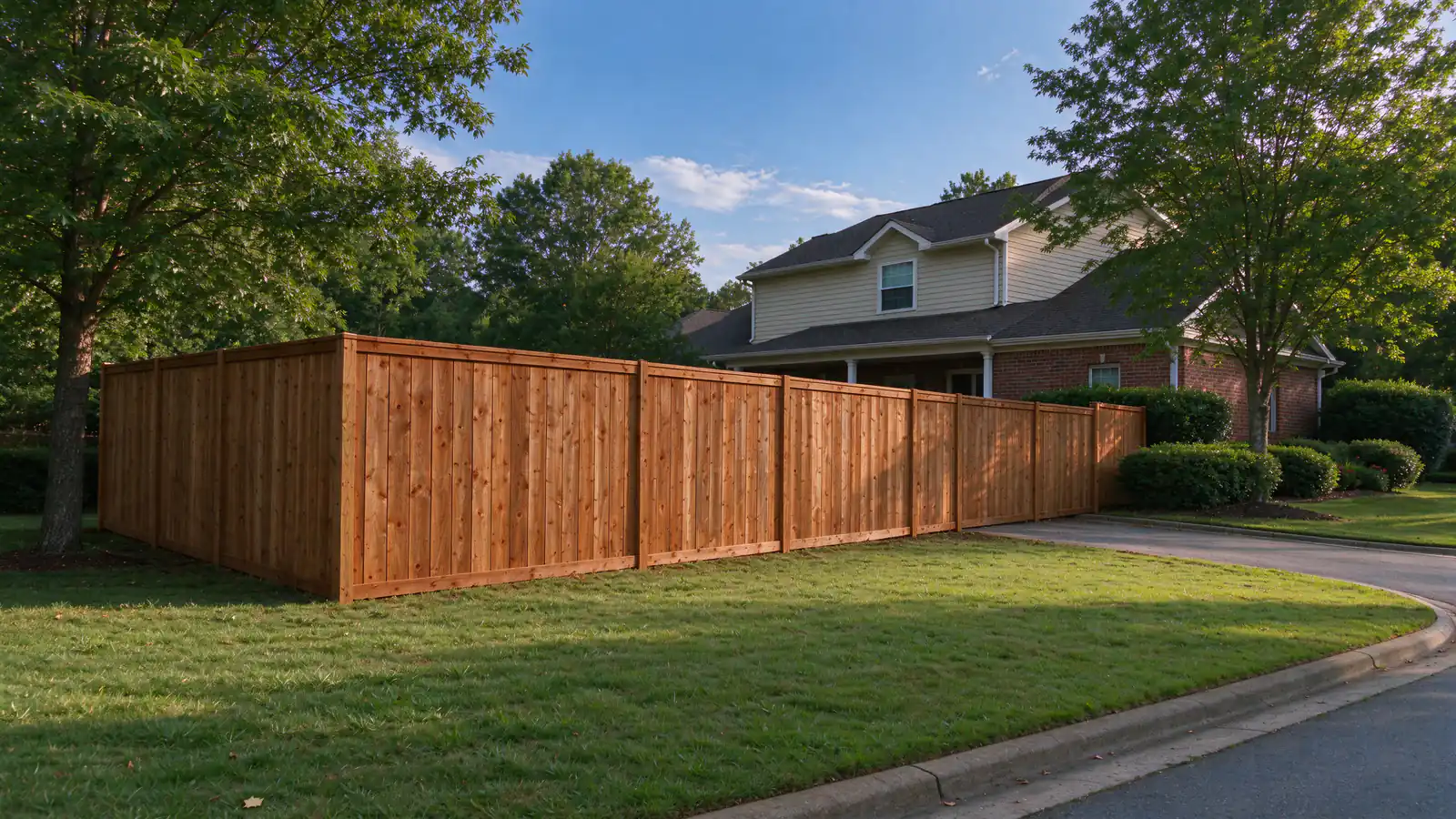
A fence does not need a permit in Peachtree Corners unless it needs footers, as brick or stone walls usually do. The city still asks for a site plan by email before installation to confirm the fence complies.
Corner lots have two street sides. The front yard is limited to 4 feet; on the corner side, a fence in line with the house can be 6 feet, and one between the house and the right-of-way only 4 feet.
Only vinyl-coated chain link is permitted, and only in side and rear yards. Uncoated chain link, woven wire and hog wire are not allowed.
The city's permitted list is brick, stone, wood, stucco, split rail, wrought iron and aluminum that looks like wrought iron. Vinyl is not on it, so confirm with the city before planning a vinyl fence.
Most fences in Peachtree Corners need no permit, yet the city still wants to see where they will go before the first post is set. Upright Johns Creek Fencing builds fences there, just across the Gwinnett line from Johns Creek, with the work handled by licensed and insured fencing contractors. Peachtree Corners handles fences differently from its neighbors. Most fences need no permit at all, which saves time, but the city sets clear limits on height, location and materials and asks to see a site plan before a fence goes up. The rules are published in the city’s Residential Fence Guidelines, which point to Article VII, Section 700 of the zoning ordinance.
The city’s guidance is short: a permit is not needed to install a fence unless it requires footers, which is typical of brick or stone walls. All fences still have to comply with the zoning ordinance, and the city asks homeowners to email a site plan to Planning and Zoning before installation to confirm compliance. For a wood, aluminum or chain link fence, that means no permit wait, but the plan should be right before the first post goes in.
For walls, piers or fences on masonry footings, a permit is needed. The Johns Creek permit guide compares how neighboring cities handle permits.
On a lot that is not on a corner, fences can be up to 4 feet in the front yard and 8 feet in the rear and side yards. Height is measured from the finished grade of the property.
Corner lots, common along curving subdivision streets in Peachtree Corners, have two street sides and stricter limits. The front yard is still 4 feet. The corner side is split: a fence in line with the house can be 6 feet, but a fence between the house and the right-of-way is limited to 4 feet. Rear and interior side yards allow 8 feet. A privacy fence on a corner lot therefore usually starts at or behind the side of the house, with a lower fence or none along the street.
Peachtree Corners publishes its permitted materials: brick, stone, wood, stucco, split rail, wrought iron, or aluminum that looks like wrought iron. Vinyl-coated chain link is permitted in the side or rear yard only. Uncoated chain link, woven wire, hog wire, barbed wire, exposed concrete block, tires and discarded materials are not permitted.
Vinyl is not on the permitted list. If you are considering a vinyl fence in Peachtree Corners, confirm with the city first; wood and aluminum are the usual alternatives.
The city encourages owners to put a fence just inside their property line, so it can be built and maintained without going onto a neighbor’s property. Fences cannot be placed in the public right-of-way. The finished side faces out, with posts and rails toward the owner’s yard; board-on-board and shadowbox styles look finished from both sides. The finished side guide covers how that works on corner lots.
Before digging with a powered auger, a Georgia 811 locate request goes in at least 3 business days ahead, the same as anywhere in Georgia.
Because most fences need no permit, the sequence is shorter than in Johns Creek or Sandy Springs. The line is measured and the site plan drawn, including corner-lot heights where they apply. The site plan goes to Planning and Zoning by email for a compliance check and to the HOA if the subdivision has one. The 811 request goes in, and installation follows: posts on a gravel base with crowned concrete, then rails and boards or panels, then gates. Walls and masonry piers add a permit and footing work.
Peachtree Corners reaches the Chattahoochee on its western edge, near Jones Bridge and Simpsonwood Park, and neighborhoods there can sit close to the river and its tributaries, where wet ground and protected areas affect where a fence can go; confirm with the city before clearing a new line near the river. Many subdivisions in the city have mature trees along lot lines, and fence lines are often routed around trunks and roots rather than through them.
Like the rest of the Piedmont, much of the ground has clay subsoil, so posts get drainage under the footing whatever the material. The post depth guide explains why.
The city’s material rules shape dog fences: vinyl-coated chain link works in side and rear yards, and aluminum works where a fence faces a street. The dog fence guide covers escape routes. Pool barriers follow the state pool and spa code with the pool’s permit; see the pool fence page.
Typical Atlanta-area ranges apply: about $20 to $30 per foot installed for a 6-foot wood privacy fence, $25 to $50 for aluminum and $8 to $24 for chain link, with vinyl-coated fabric toward the high end. Most fences here have no permit fee. Corner lots with mixed heights, gates and slopes add to the work. The fence cost guide shows how an estimate adds up.
Many Peachtree Corners neighborhoods have their own covenants and architectural review, which can be stricter than the city’s rules. An HOA may limit fences to the rear yard, require a particular style or stain color, or ask that fences along a shared line match. The city’s site plan check and the HOA’s review use much of the same information, so the drawing is prepared once and sent to both. The HOA approval guide covers what committees typically ask for.
Gates on corner lots are placed with both street sides in mind, so a gate on the side street does not sit inside the 4-foot zone between the house and the right-of-way unless it meets that height. Wide gates for trailers or boats need posts sized for them and a clear swing over the driveway’s slope; see the gate installation page for how gates are built to stay square.
Planning a fence in Peachtree Corners?
Send the address and the rough length; the rules for that lot come first.
Not for most fences. Peachtree Corners requires a permit only when the fence needs footers, typical of brick or stone walls. The city asks homeowners to email a site plan before installation so staff can confirm the fence complies.
Front yard fences are limited to 4 feet. On the corner side, a fence in line with the house can be 6 feet, and a fence between the house and the right-of-way is limited to 4 feet. Rear and interior side yards allow 8 feet.
Vinyl-coated chain link is permitted in side and rear yards only. Uncoated chain link, woven wire and hog wire are not permitted.
Typical Atlanta-area ranges run about $20 to $30 per foot installed for a 6-foot wood privacy fence, $25 to $50 for aluminum and $8 to $24 for chain link, with vinyl-coated chain link toward the high end. Most fences here need no permit fee.
Just inside the property line, as the city encourages, so the fence can be built and maintained without going onto a neighbor's lot. Fences cannot be placed in the public right-of-way.
Send the rough length, the material you are considering and whether an HOA or pool is involved. Photos of the yard help.
Upright Johns Creek Fencing
office@uprightjohnscreekfencing.com
11340 Lakefield Dr, Johns Creek, GA 30097
Monday to Friday 8 AM to 6 PM; Saturday and Sunday 9 AM to 2 PM
Outside these hours, emergency calls only
Photos of the fence line, the corners and any gates help most.