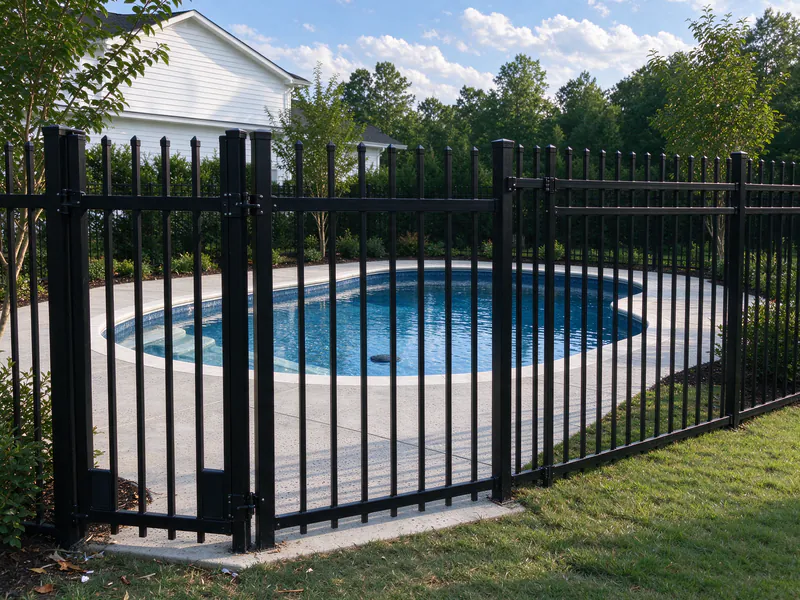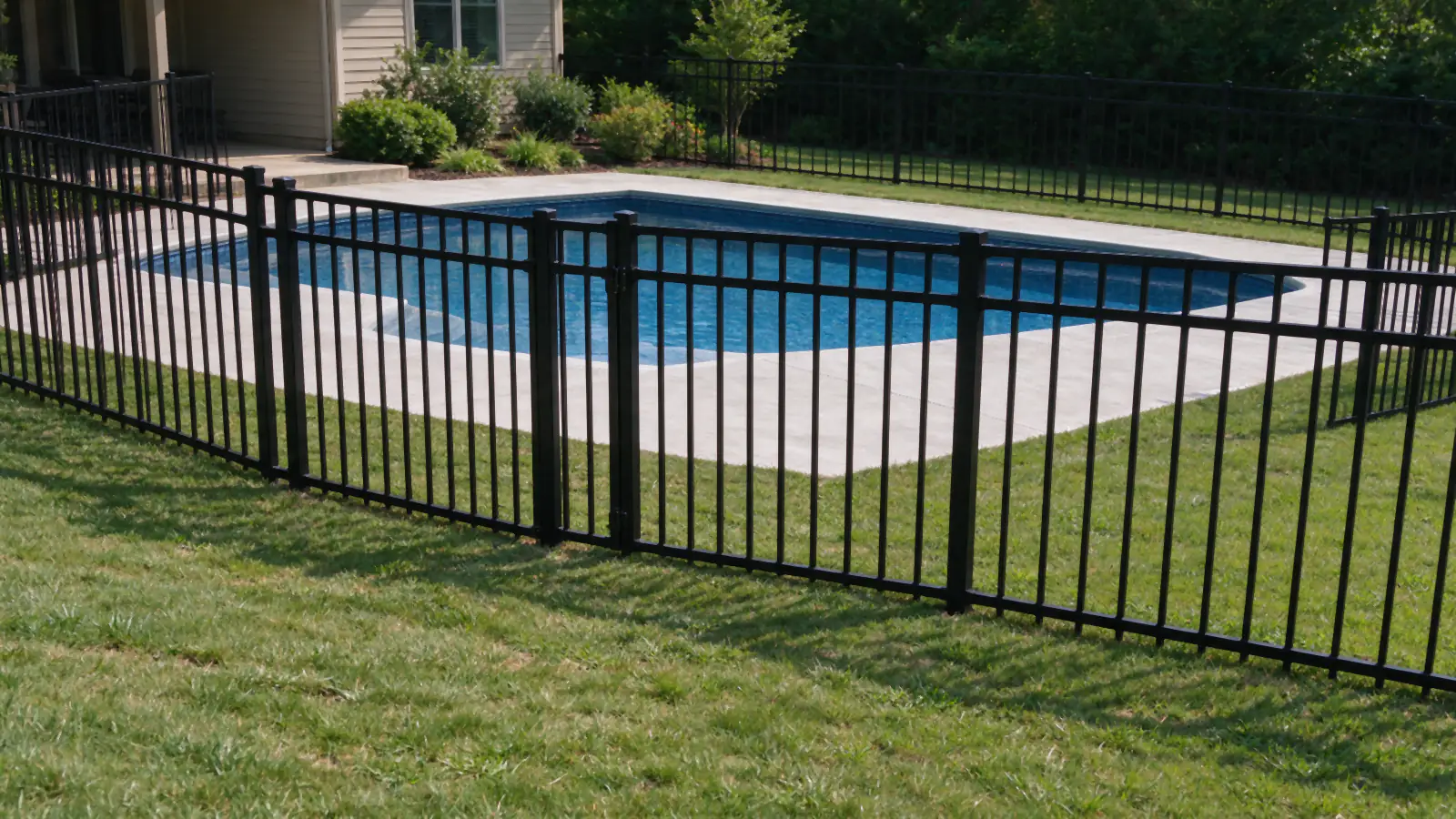
Upright Johns Creek Fencing installs pool fences and barriers across Johns Creek and north Fulton, with the work done by licensed and insured fencing contractors. A pool barrier is a safety system, not a decorative fence. Its job is to keep young children out of the pool area when no adult is watching, and every detail of it, from the height to the latch, is chosen with that in mind.
Pool barriers in Georgia follow the International Swimming Pool and Spa Code as adopted with the state’s amendments, applied through your local pool permit and inspection. The Consumer Product Safety Commission’s Safety Barrier Guidelines for Home Pools explain the reasoning behind most barrier requirements and are referenced throughout this page. Where the local code and the guidelines differ, the local code is what the inspector checks.
What happens on the first visit
The visit starts with the pool plan. For a new pool, the barrier is laid out with the pool contractor so it fits the deck, equipment and access, and so it can be included with the pool permit. For an existing pool, the current barrier is checked: height along the whole line, gaps under it, spacing between pickets or boards, anything on the outside that could be climbed, and above all the gates.
The estimate lists the barrier, the gates and their hardware, and any changes to an existing fence that will form part of the barrier.
How a barrier keeps children out
The CPSC guidelines organize barrier design around three ways a child gets in: over, under and through.
Over. The top of the barrier should be at least 48 inches above grade, measured on the outside, and some jurisdictions require 60 inches. Handholds and footholds on the outside are removed. On a fence with horizontal rails, if the tops of the rails are less than 45 inches apart, the rails go on the pool side and the spacing between vertical members should not exceed 1¾ inches; if the rails are 45 inches or more apart, they can be on the outside and vertical spacing should not exceed 4 inches.
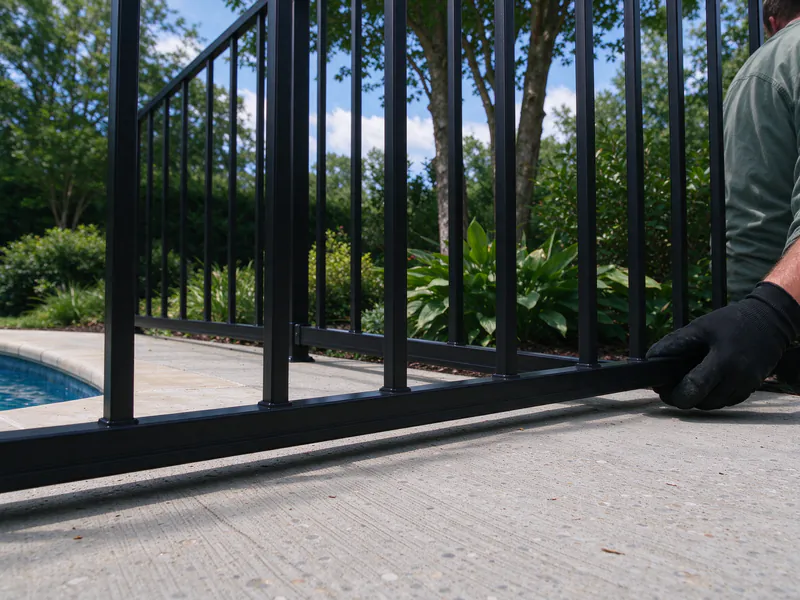
Under. The gap between the bottom of the barrier and the ground should not exceed 4 inches. On sloped or uneven ground, that gap is checked along the whole run, not just at the posts.
Through. Openings should be too small for a child to pass through. For chain link, the guidelines limit mesh openings to 1¼ inches square, or 1¾ inches with slats fastened at the top or bottom.
The local code may add to or tighten these. The Georgia pool fence rules guide explains how the state code and local permits fit together.
Gates are the weak point
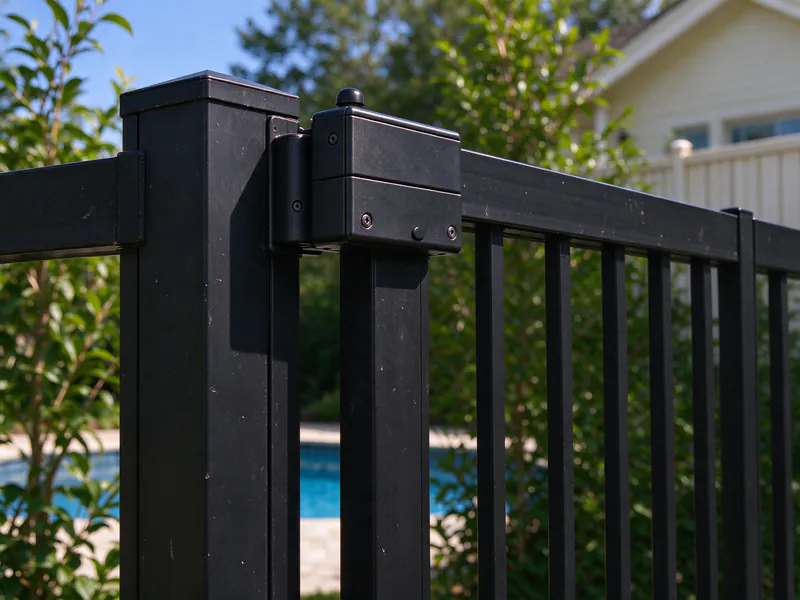
The CPSC guidelines put it plainly: the weak link in the strongest and highest fence is a gate that fails to close and latch completely. Pool gates should open out from the pool and be self-closing and self-latching, so a child pushing on a gate that did not latch actually closes it. When the latch release is less than 54 inches from the bottom of the gate, it goes on the pool side at least 3 inches below the top of the gate, where a child reaching over cannot release it.
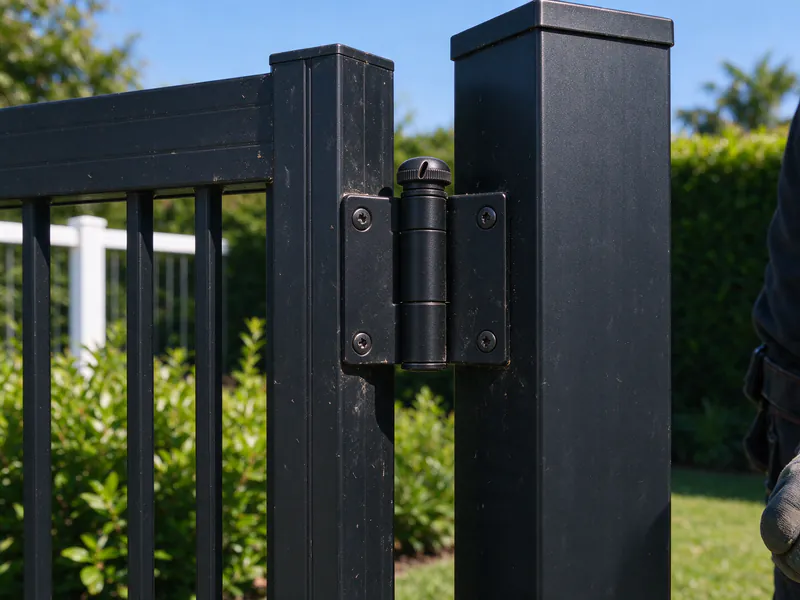
Gate hardware is chosen before the fence around it: hinges with adjustable closing tension, latches designed for pool gates, and posts set firmly enough that the gate does not drift out of alignment. Each gate is tested to close and latch from any open position, including just slightly open, which is where weak closers fail. The gate installation page covers posts and frames.
Choosing a material
Aluminum is the most common pool fence material because it keeps the view of the pool open, does not rust around pool water and comes in pool-rated styles designed for barrier spacing. Flat-top styles avoid points where clothing can catch.
Wood privacy fences can serve as barriers, but their horizontal rails must face the pool side and their gates are heavy, which makes reliable self-closing harder. Removable mesh fences are designed specifically for pools; the CPSC guidelines call for them to be at least 48 inches tall with a small bottom gap, and they are typically installed by specialists. Chain link can be used with the mesh limits above.
Using an existing fence and the house
Many backyards already have a fence, and it can sometimes form part of the barrier. That only works if it meets the barrier requirements along every foot: height, gaps, spacing, no outside footholds and compliant gates. Common fixes are changing gates, closing bottom gaps and adding panels where a privacy fence has horizontal rails on the outside.
When the house forms one side of the barrier, doors and windows that open onto the pool area need their own protection under most barrier codes, such as alarms or self-closing doors. That is planned with the pool contractor and the permit, not added later.
Planning with the pool permit
Some cities permit and inspect the barrier as part of the pool. Roswell, for example, permits and inspects pool fences with the swimming pool, and Sandy Springs reviews pool enclosures under its pool permit and the International Swimming Pool and Spa Code. A temporary barrier may be needed while the pool is under construction. Nobody can promise an inspection result in advance; the barrier is built to the code and then inspected.
Pets and pool fences
A pool barrier built for children usually keeps small pets out of the pool area too, though very small dogs can sometimes pass through spacing that stops a child. Where that matters, closer picket spacing or mesh at the bottom is added. The dog fence guide covers keeping pets in the yard.
Keeping a barrier working
A pool barrier only protects when it works. Gates are checked regularly to make sure they close and latch on their own; hinge tension drifts and latches loosen. Furniture, planters and grills are kept away from the outside of the fence, where they become footholds. Gates are never propped open. After a storm, the barrier is walked for damage, and any gap is closed before the pool is used. Fence repair treats damaged pool barriers as the first priority.
What a pool fence costs
Aluminum typically runs about $25 to $50 per foot installed in the Atlanta area, with pool-rated styles toward the high end. Gates with pool hardware, slopes that need racking and careful bottom-gap control, and changes to an existing fence add to that. The fence cost guide shows how an estimate adds up.