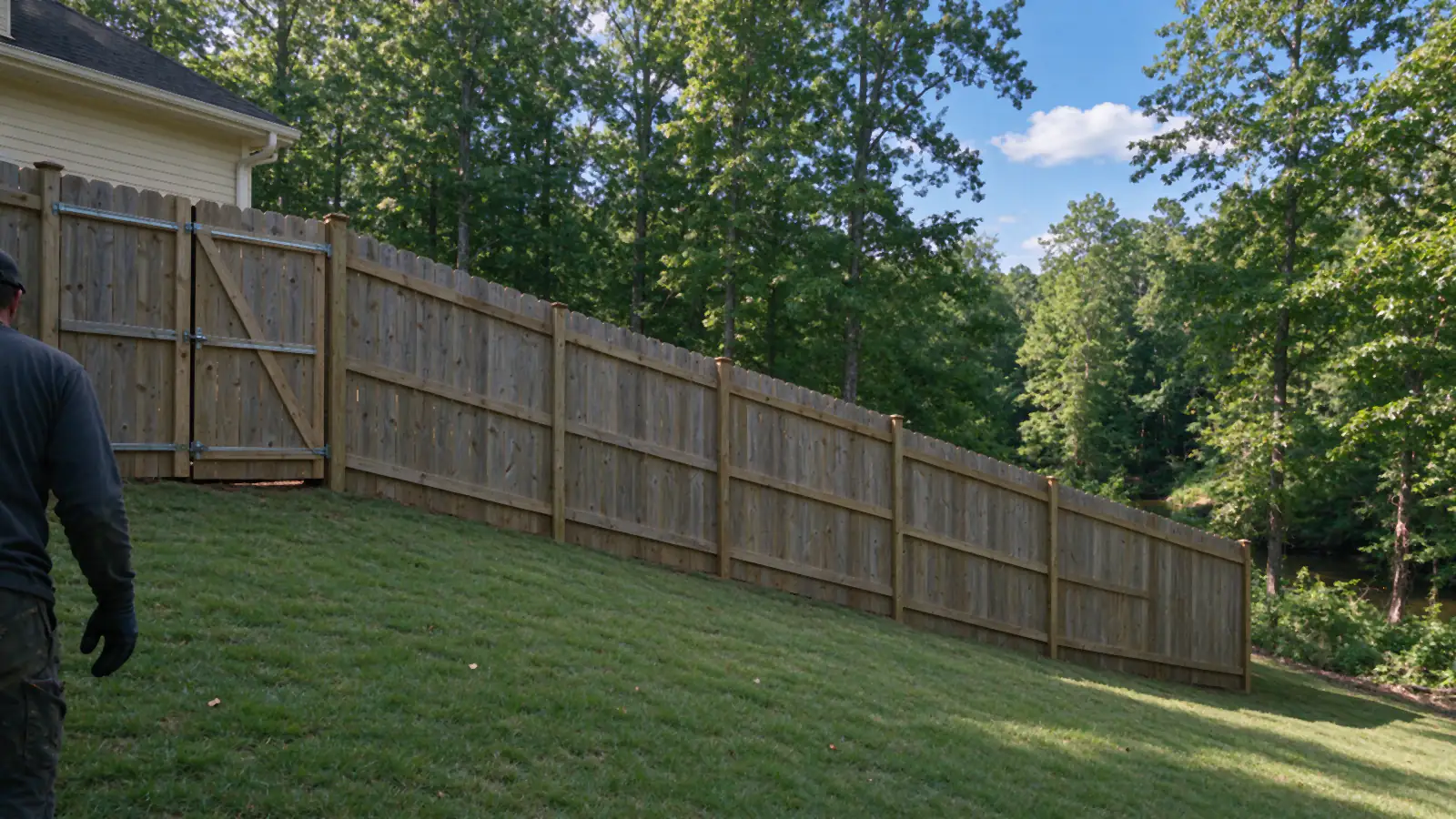
A slope does not have to mean a fence full of gaps or a jagged top line. Racked wood follows the grade smoothly, stepped panels look crisp when their gaps are filled, open materials disappear on steep ground, and a fence line can be split into terraces where the yard levels out. Gates are placed where the ground allows them to swing.
Upright Johns Creek Fencing builds fences on sloped lots across north Fulton, where many backyards fall toward a creek or swale. These ideas build on the slope guide, which explains racking and stepping in detail.
Racked wood privacy
On a steady grade, a racked wood privacy fence follows the slope with no gaps underneath. The top line runs parallel to the ground, so it looks natural from the house. It suits dog owners, since there are no triangles to squeeze through. Board-on-board or shadowbox both rack well.
Stepped panels with fillers
Stepped fences keep a level top line, which many people prefer from the patio. The triangles under each step can be filled with a cut board, a treated kickboard or a landscape timber, matching the fence. Plantings along the low side soften the steps.
Open metal on steep ground
On a steep backyard, a solid stepped wall can feel heavy. Black aluminum or vinyl-coated chain link nearly disappears, especially against woods. Many aluminum panels rack within limits; the aluminum vs steel guide compares metals.
Mixed materials
A common layout puts wood privacy along the upper part of the yard, near the patio and the neighbors, and black chain link or aluminum down the slope toward the woods. Each material goes where it works best, and the open fence avoids catching wind on the exposed lower ground.
Terraces
Some yards level out in steps, with a flat area near the house and another lower down. The fence can follow those terraces, stepping where the yard steps. Retaining walls may already define the levels; a fence is usually set just behind a wall rather than on top of it, unless the wall was designed for the load.
Gates on a grade
Gates need the flattest spot on the line. A gate on a slope should swing downhill or be cut to the grade. Wide gates for mowers on a slope can be split into a pair. The gate installation page covers hardware.
Dogs on a slope
Gaps under stepped sections are the most common escape route on sloped lots. Racked sections or filled steps close them, and diggers need a buried barrier. The dog fence guide covers escapes.
Drainage
Water runs down a slope and along the fence. Leaving an opening at low points keeps the fence from damming water. Posts on a slope are often set deeper; the post depth guide explains why.
Planting along the line
Plantings soften a fence on a slope and help hold soil. Low shrubs along the downhill side hide stepped gaps from the house, and groundcover keeps rain from washing soil away from post bases. Keep plants a little away from wood boards so they can dry, and avoid planting trees right on the line, where roots push posts over time. On drainage swales, leave the water’s path clear.
Lighting and views
On a sloped lot, the fence is often seen from above, from a deck or upstairs windows. Cap rails and a clean top line matter more there than on a flat lot. Low-voltage lights along the fence help on steps and paths, but their wires are private lines that 811 does not mark, so note them before any future digging. The 811 guide explains why.
Height and rules
On a stepped fence, the downhill end of each section can stand taller than the uphill end. Ask your city and HOA how they measure before choosing panels. Questions about a specific yard can go to the number at the top of the page or the form below.