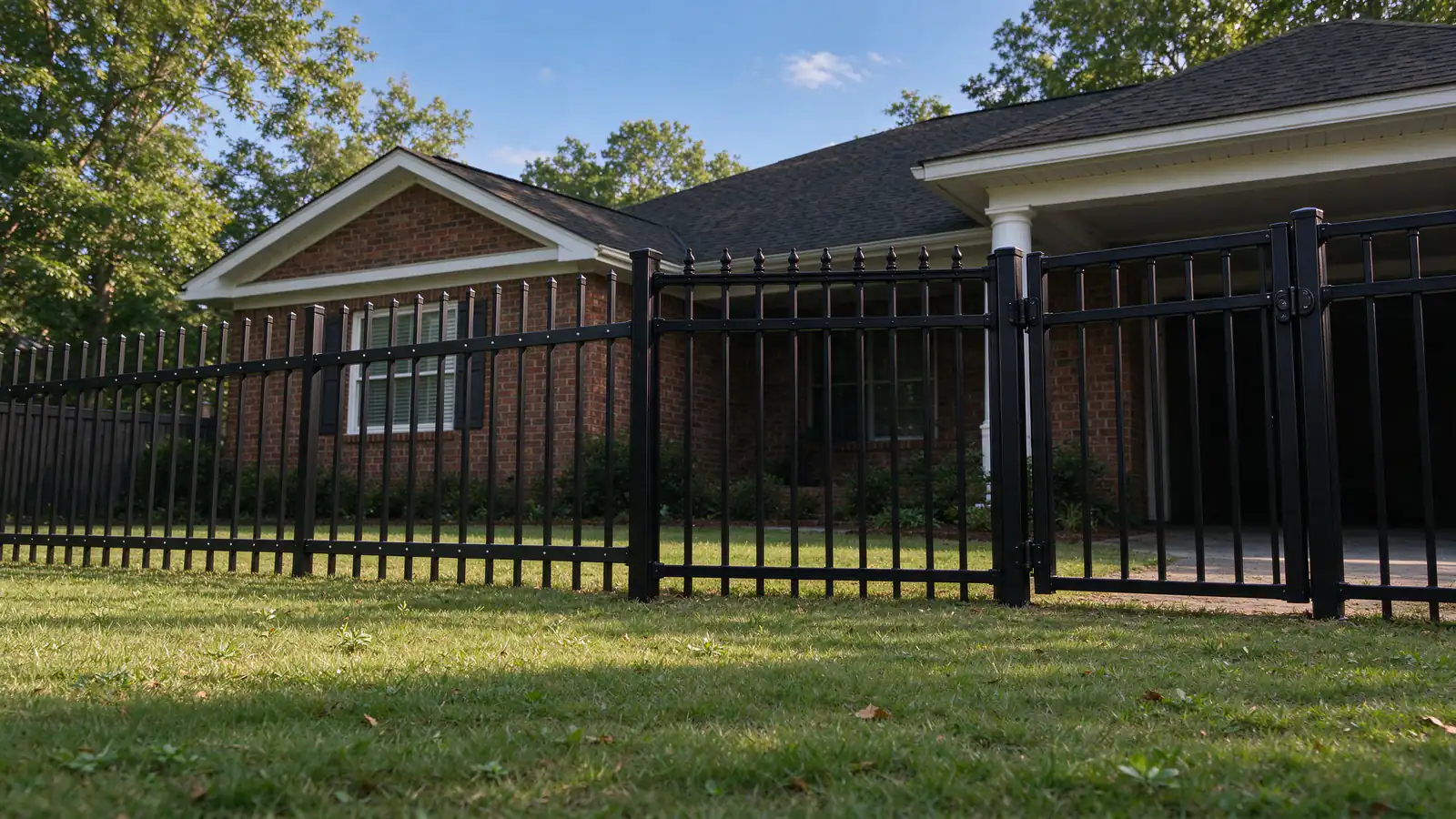
For most Johns Creek yards, aluminum is the better choice. It does not rust, it is light enough that many panels rack to follow a slope, and pool-rated styles are designed for barrier requirements. Ornamental steel is stronger and makes sense where strength matters most: long or heavy driveway gates, security fencing and places where people lean or climb. Both look like wrought iron from the street.
Upright Johns Creek Fencing installs both aluminum and ornamental steel fences across north Fulton. This guide compares them on what matters for a typical yard here.
Rust and coatings
Aluminum does not rust. Its powder-coated finish can scratch, chip or slowly chalk in strong sun, but the metal underneath does not corrode, so a scratch is cosmetic. That is the main reason aluminum dominates residential ornamental fencing in humid climates.
Steel rusts wherever its protective coating is broken. Modern ornamental steel is usually galvanized and powder-coated, which protects it well when intact, but scratches from mowers, cut ends and drilled holes need touch-up or they start to rust and stain. Steel near sprinklers or in constantly damp shade needs more attention.
Strength and gates
Steel is stronger and stiffer. That matters most for gates. A long driveway gate in aluminum may need a steel frame or extra bracing to stay square, while a steel gate of the same size handles the load more easily. For automated gates, the gate and posts must carry the operator’s force too, and steel is common there; the automatic gate page and the swing vs sliding gate guide cover that.
For the fence line itself, residential aluminum is strong enough for most yards when the posts are set properly in concrete. Steel suits security perimeters and places where heavy contact is expected.
Slopes
Many Johns Creek front and back yards slope. Many aluminum panels rack, meaning the rails tilt to follow the grade while the pickets stay vertical, so the bottom follows the ground without gaps. Each panel has a rated racking limit; beyond it, panels are stepped. Some steel panels rack as well, but steel’s stiffness and weight make on-site adjustments harder. The slope guide explains racking and stepping.
Pools
Aluminum is the common choice around pools. It does not rust around pool water and chemicals, and pool-rated styles are made with picket spacing, rail placement and bottom gaps meant for barrier requirements, plus gates with self-closing hinges and self-latching hardware. Steel can serve as a pool barrier too, but corrosion near pool water is a concern. The pool fence page and the Georgia pool fence rules guide cover what a barrier needs.
Weight and installation
Aluminum panels are light, which makes them faster to install and easier to handle on slopes and in tight side yards. Steel is heavier, needs more people or equipment to set, and its posts carry more weight. For long runs, that difference shows up in labor.
Cost
Typical Atlanta-area ranges for installed aluminum fence run about $25 to $50 per foot, with pool-rated styles, taller panels and decorative tops toward the high end. Ornamental steel is usually priced per project because sizes, gauges and fabrication vary widely; it generally costs more than aluminum for the same look. Gates are priced separately for both. The fence cost guide explains the factors.
Looks and styles
Both come in flat-top, spear-top and decorative styles, usually black, sometimes bronze or white. From the street, most people cannot tell them apart. Steel can carry heavier, more elaborate designs; aluminum covers the common residential styles well. In Sandy Springs, fence colors are limited to black, white and earth tones, and black ornamental metal is a common choice along street-facing runs with masonry piers.
Pets and children
For dogs, picket spacing and the bottom gap matter more than the metal. Puppy-picket panels add extra pickets near the bottom for small dogs. Flat-top styles avoid points that can catch clothing, which is why they are preferred around play areas and pools. The dog fence guide covers escape routes.
How to decide
Choose aluminum for front yards, backyards, pools and sloped lots where rust-free upkeep matters. Choose steel for heavy driveway gates, security fencing and high-contact areas, and plan on touching up the coating over time. A common combination is an aluminum fence line with a steel driveway gate in a matching style. The aluminum fence page covers installation, and questions about a specific yard can go to the number at the top of the page or the form below.
Driveway and street-facing runs
Front yards draw the most attention from HOAs and neighbors, and they are where ornamental metal is most often chosen. A front run usually ties into the house corners and frames a walk gate, with a wider gate or pair of gates at the drive. Aluminum covers the fence line itself well. At the drive, the choice turns on gate width, whether a gate operator will be added later and how much the gate will be used. A wide gate that opens several times a day benefits from steel’s stiffness or a reinforced aluminum frame. Many owners pair masonry columns at the drive with aluminum panels between them, which keeps the look consistent and puts the heaviest loads on the masonry. The gate installation page covers hinge posts and hardware.